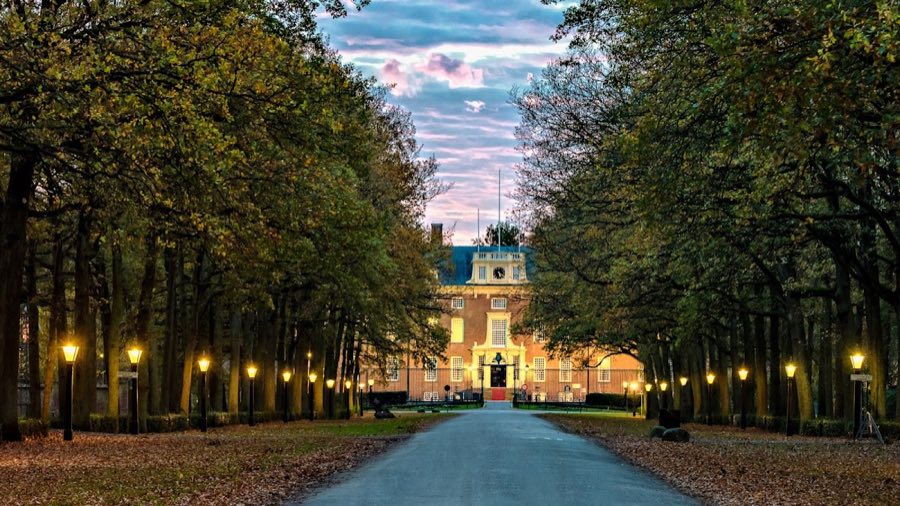
No. 50859
Slot Zeist
Netherlands
PalaceIntactFor rent17th century
No. 44343
Castle · Netherlands
No. 44343 · 52.024 N, 5.284 E
For events
Sterkenburg is marked as a château or castle venue lead. Capacity, indoor/outdoor spaces, catering rules, and accommodation options are published only after public verification.
Event types: Private events, Cultural gatherings, Filming and photography
Quick summary
Sterkenburg is a castle in Netherlands with origins associated with the 13th century.
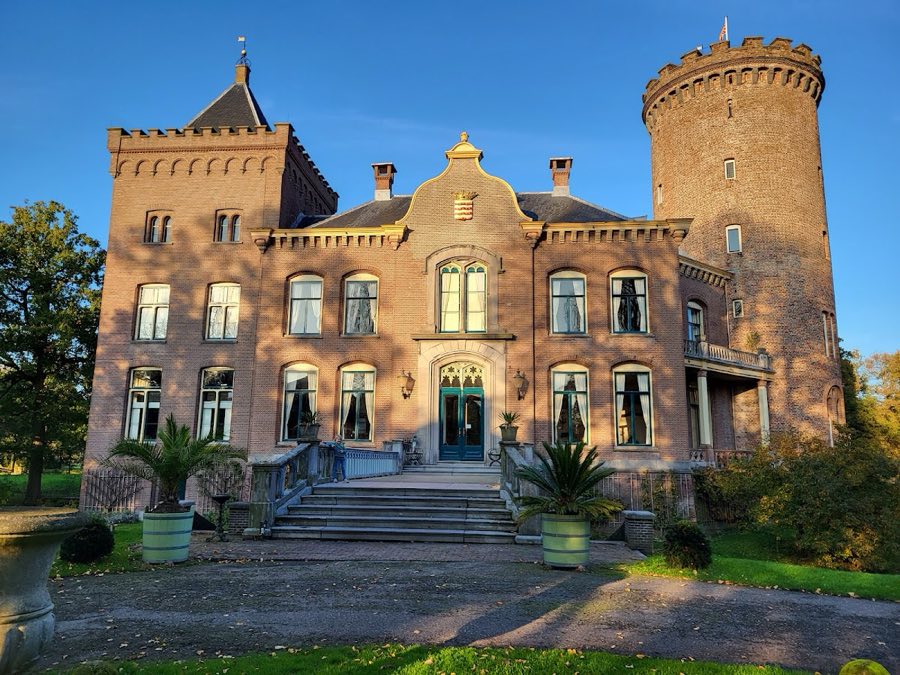
See all castles in NetherlandsKasteel Sterkenburg in Driebergen-Rijsenburg, Netherlands, is a medieval ridderhofstad (noble manor or knight’s seat) begun by members of the house of Wulven in the thirteenth century. It first appears in written records in 1261, and for many centuries the site functioned within the complex feudal landscape of the Low Countries: the castle was held as a fief from the count of Gelre while the land tenure acknowledged the authority of the bishop of Utrecht. As a landed seat of local nobility, Sterkenburg played a steady role in regional lordship and administration.
During the late thirteenth and early fourteenth centuries the estate belonged to the Wulven family and their successors. A figure called Ernst appears in local documents for the early fourteenth century (1307–1324) under the name van Sterkenburg and may correspond to an earlier Ernst van Wulven. In 1309 Ernst is recorded alongside two brothers, Hendrik and Gijsbrecht. Members of this circle also held rights farther afield, with both an Ernst van Wulven and a later Ernst van Sterkenburg owning half of the Holland lordship of Berkel.
The original Sterkenburg lineage ended in the fifteenth century with Catharina van Sterkenburg, who in 1456 married Wouter van Isendoorn and brought the house and its lordship into that family. The castle’s status as a ridderhofstad was formally recognized in 1536, confirming its standing among the region’s noble estates. In June 1647 Anthonis van Aeswijn was found dead in the nearby forest a few months after his marriage; the killing remained unresolved despite large rewards for information.
Ownership continued to pass through marriage and sale during the later seventeenth and eighteenth centuries. Sterkenburg transferred to the Van Mathenesse family in 1666 and then to Florentina van Mathenesse in 1681, who was married to Johan, baron van Hardenbroek. In 1725 control moved by sale to Catharina van Heusden for the benefit of her son Johan Frederik de Mamuchet van Houdringe (1692–1740). His sister Johanna Catharina de Mamuchet van Houdringe (1690–1772) inherited in 1740, and the estate remained in that Utrecht regent family into the nineteenth century.
After the death of mr. Jan Jacob van Westrenen of Sterkenburg (1802–1827), the property was purchased in 1829 by his half-sister Anna Maria Cornelia van Westrenen and her husband Pieter Anthony Hinlópen. From 1841 the house was rented to the widow Johanna Maria Kneppelhout-de Gijselaar; her son, mr. Karel Jan Frederik Cornelius Kneppelhout (known as Kees), bought Sterkenburg in 1848 and carried out an extensive rebuilding that year, producing the castle’s present exterior appearance. Kees Kneppelhout and his family enhanced the estate in the 1860s, adding a square freestanding dovecote in 1862 and a square tower on the west side in 1867, the latter fitted with a then-modern bathroom and a water system. The Kneppelhout family lived at Sterkenburg until the late 1920s.
In the mid-twentieth century the estate’s purpose shifted. From 1948 the house served as a boarding school, then as an educational institute under the De Jeugdland Foundation, and later as a conference center. Ownership passed within Kneppelhout heirs and then to the Steengracht family from 1970. The castle and its outbuildings were sold in 1978 to Hendrik de Groot, who divided the main house and the gardener’s dwelling into multiple residential units. De Groot later bequeathed the property to the De Kiem Foundation; that foundation sold it in 2004 to the current private owner, who placed the estate into a holding company and arranged for management and restoration through the Foundation for the Preservation of Sterkenburg. The castle has been the subject of recent restoration work with subsidy support from the National Service for Archaeology, Cultural Landscape and Monuments, and the ensemble carries protected national-monument status.
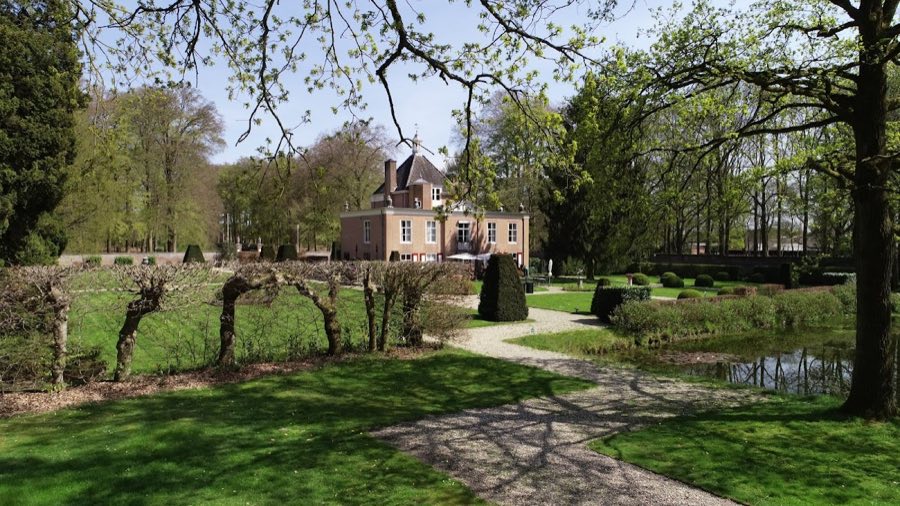
The estate presents as a nineteenth-century appearance layered onto a medieval site, with a main house set among several mapped outbuildings. The principal building shows the form produced by the large reconstruction of 1848; that project determined the castle’s visible silhouette and overall character today. The house stands as the central element around which later additions and subsidiary structures are grouped.
A square freestanding dovecote was erected on the grounds in 1862 in a conscious medieval style, serving the traditional function of a pigeon house and forming a deliberate picturesque feature of the nineteenth-century landscape. The structure is detached from the main building and reflects the period taste for reviving older rural forms.
On the west side of the main house a square tower was added in 1867. The tower was fitted internally with a then-modern bathroom and a water system, marking a late nineteenth-century effort to introduce contemporary domestic conveniences into the older estate layout. The tower remains an identifiable vertical element on the western façade.
The estate’s ancillary buildings include a gardener’s house and a western coach house. The coach house suffered partial burning at some point before the late twentieth century and is described as partly burned in surviving records. The gardener’s house and the main house were divided into multiple residential units when the property changed hands in 1978; that subdivision altered internal arrangements while leaving the ensemble of external buildings intact.
Conservation and recent repairs have returned many parts of the property to good condition. The castle and its accompanying buildings are protected as a national monument, and individual components hold their own protected status within that designation. Management of restoration work and ongoing preservation is coordinated by the Foundation for the Preservation of Sterkenburg, which oversees maintenance and adaptive use of the historic structures.
No. 50859
No. 18487
No. 58374
No. 77524
Comments
Comments for Sterkenburg will require a verified account before posting.
We'll send a verification link before your first comment is published.