No. 87135
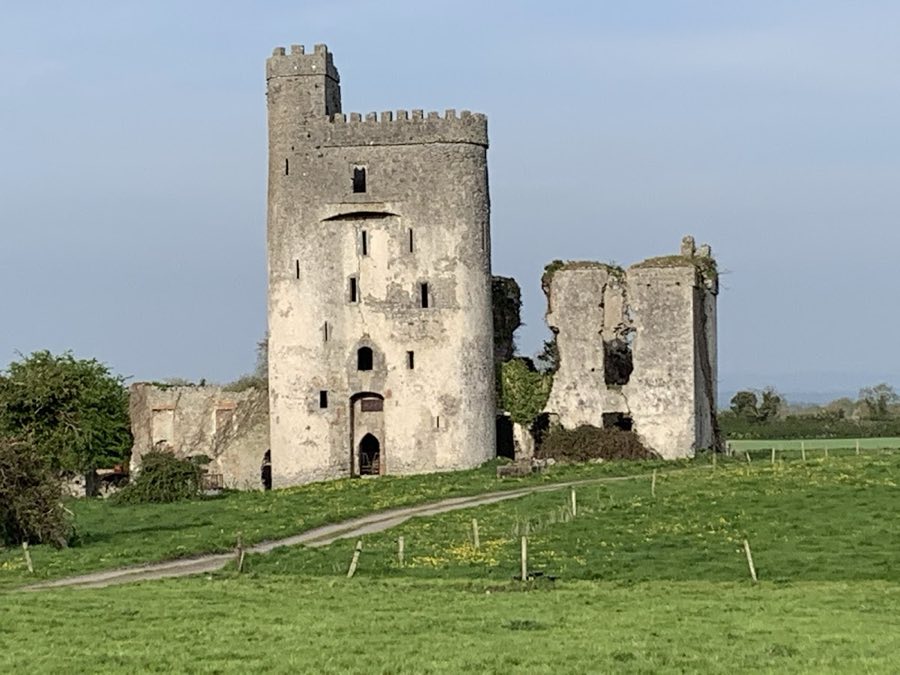
Ballyadams Castle
Ireland
Tower houseRuin16th century
No. 57865
Castle · Ireland
No. 57865 · 52.943 N, 6.887 W
For rent
Kilkea Castle is marked for bookable castle accommodation. Nightly pricing, sleeps count, stay rules, and amenities are displayed only when public operator data is available.
Rental type: Hotel / bookable stay, Short-stay rental
Short-term availability: Bookable accommodation signal
Quick summary
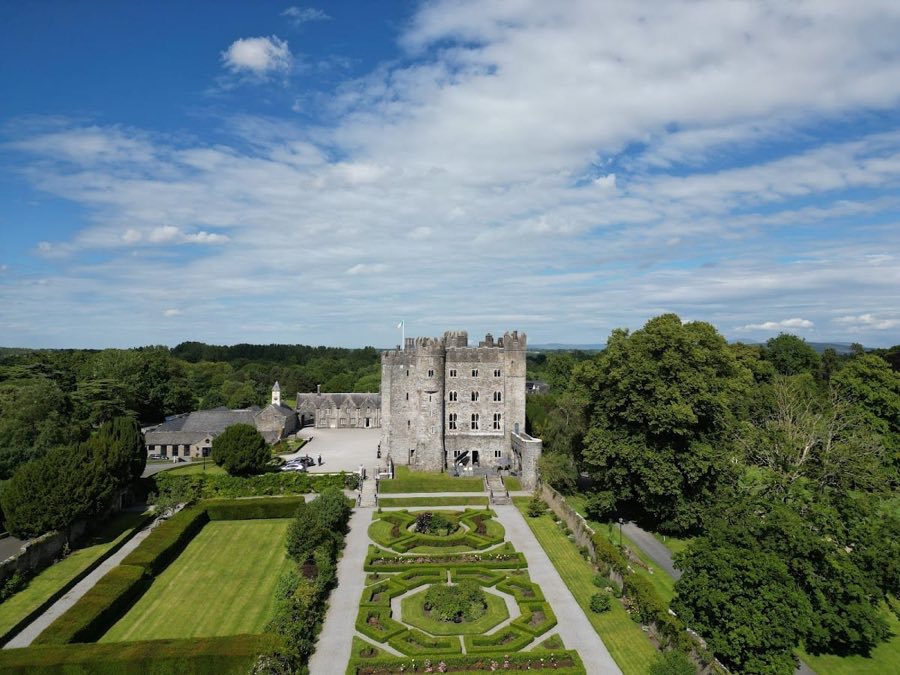
Kilkea Castle is a castle in Ireland with origins associated with the 12th century.
See all castles in IrelandKilkea Castle is situated near the village of Kilkea, in the municipality of Castledermot, Ireland. It was originally established by Anglo-Normans following their conquest of Ireland in the late 12th century.
The castle’s origins date back to 1180 when Sir Walter de Riddlesford built a motte-and-bailey fortification, a wooden stronghold placed atop an artificial mound. This early structure served as a defensive position during the turbulent period of Norman expansion into Irish lands. Through marriage, the estate passed from de Riddlesford’s family to the Fitzgeralds when his granddaughter married Maurice Fitzgerald, 3rd Baron of Offaly. Thereafter, the Fitzgerald family held possession for more than seven centuries, making Kilkea Castle a longstanding center for this influential Anglo-Irish dynasty.
In the mid-14th century, the castle gained military significance when Sir Thomas de Rokeby, who served as Justiciar of Ireland from 1349 to 1356, chose it as his operational base. He remained there until his death in 1356. Several generations later, in 1426, the castle was largely rebuilt and strengthened under John FitzGerald, the 6th Earl of Kildare, reflecting both its defensive needs and the family’s growing prominence.
The 16th century is a particularly notable chapter in the castle’s history, highlighted by Gerald FitzGerald, the 11th Earl of Kildare, often called the “Wizard Earl.” He assumed leadership of the Fitzgerald family following the execution of his half-brother, “Silken Thomas,” and other relatives in a 1537 crackdown. The “Wizard Earl” gained a reputation for practicing alchemy and magic, and local folklore connects him with a supernatural return to Kilkea Castle every seven years riding a silver-shod white horse. He died in 1585, leaving behind this enduring legend.
In 1634, ownership shifted in use when the widow of the 14th Earl of Kildare leased Kilkea Castle to the Jesuit Order. The Jesuits occupied it as a religious residence until 1646. During the Irish Confederate Wars, Archbishop Rinuccini, the papal nuncio to the Irish Confederation, took refuge at the castle, highlighting its role as a strategic and ecclesiastical site in this period of conflict.
By the early 18th century, the main family seat moved to Carton House under the 19th Earl of Kildare. Kilkea Castle was leased out to tenants such as Thomas Reynolds, a Dublin silk merchant who also acted as an informer during the 1798 United Irishmen rebellion. During this uprising, military forces sacked the castle, reflecting the unrest convulsing Ireland at the time.
In 1849, Kilkea Castle suffered fire damage. Restoration efforts were led by Lord Walter, the 3rd Duke of Leinster, who then resided there. He also founded the Kildare Archaeological Society in 1891, demonstrating an active interest in local heritage. Following the sale of Carton House in 1949, Kilkea Castle became home to the 8th Duke of Leinster.
The Fitzgerald family eventually sold the castle and its estate in 1960. It underwent conversion into a hotel, though financial difficulties led to its closure and a 2009 sale. Later, an American businessman acquired the property, investing in renovations and reopening it as a resort venue.
In addition to its architectural and historical importance, the area around Kilkea Castle is linked to polar exploration history. Sir Ernest Shackleton, the eminent polar explorer, was born nearby in 1874 to a Quaker family that had resided in the region for over a century.
Kilkea Castle’s earliest form was a motte-and-bailey design, typical of Norman military architecture in the 12th century. This involved a wooden fort built upon an artificial mound (the motte) with an enclosed courtyard (the bailey). Although originally constructed from timber, later developments replaced much of this with stronger materials, marking its transformation into a more durable stone fortress.
In the early 15th century, the castle experienced substantial rebuilding under John FitzGerald, the 6th Earl of Kildare. His work effectively reconstructed much of the castle, reinforcing it to serve both as a residence and a defensive structure. Although detailed descriptions of these renovations are limited, this period marks the transformation of Kilkea from a wooden stronghold into a more formidable castle complex.
The castle underwent significant restoration after a destructive fire in 1849. Lord Walter, the 3rd Duke of Leinster, was responsible for these repairs and chose to reside there afterward. The precise nature of the restoration is not exhaustively documented, but it ensured the castle’s survival into the modern era.
Located roughly five kilometers northwest of Castledermot and adjacent to the R418 regional road, Kilkea Castle occupies a strategic position within the landscape. The surviving structures stand as a testament to centuries of modifications that reflect changing defensive needs and residential preferences of its occupants.
Although specific archaeological finds such as inscriptions, mosaics, or unique architectural elements are not recorded, the castle’s layered construction tells of adaptations over centuries. Oral tradition surrounding the castle, especially stories linked to the “Wizard Earl,” adds a rich symbolic dimension to its historical fabric.
Today, Kilkea Castle remains a site where these successive phases of Norman military foundation, medieval reinforcement, religious use, and Victorian restoration are evident in its overall form and fabric.
No. 87135
No. 98428
No. 63687
No. 38581
Comments
Comments for Kilkea Castle will require a verified account before posting.
We'll send a verification link before your first comment is published.