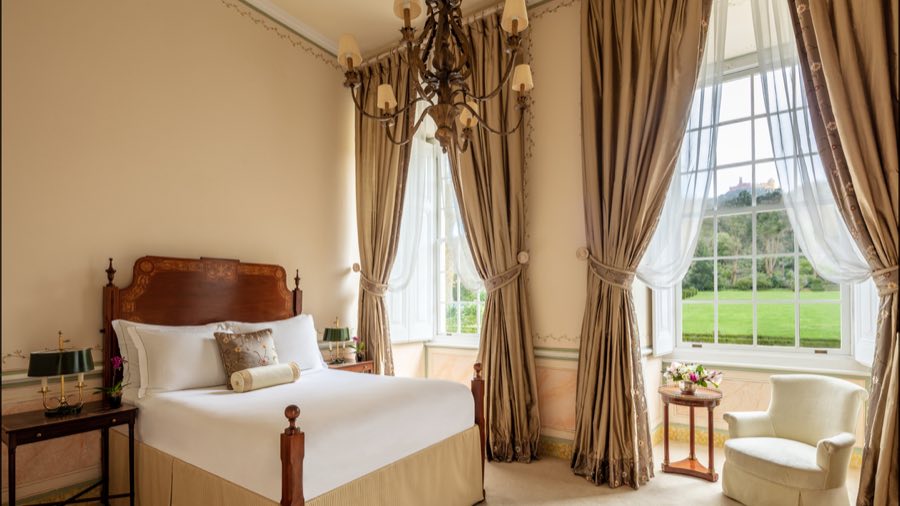
No. 48536
Seteais Palace
Portugal
PalaceIntactFor rent18th century
No. 89281
Manor house · Portugal
No. 89281 · 38.794 N, 9.421 W
Quick summary
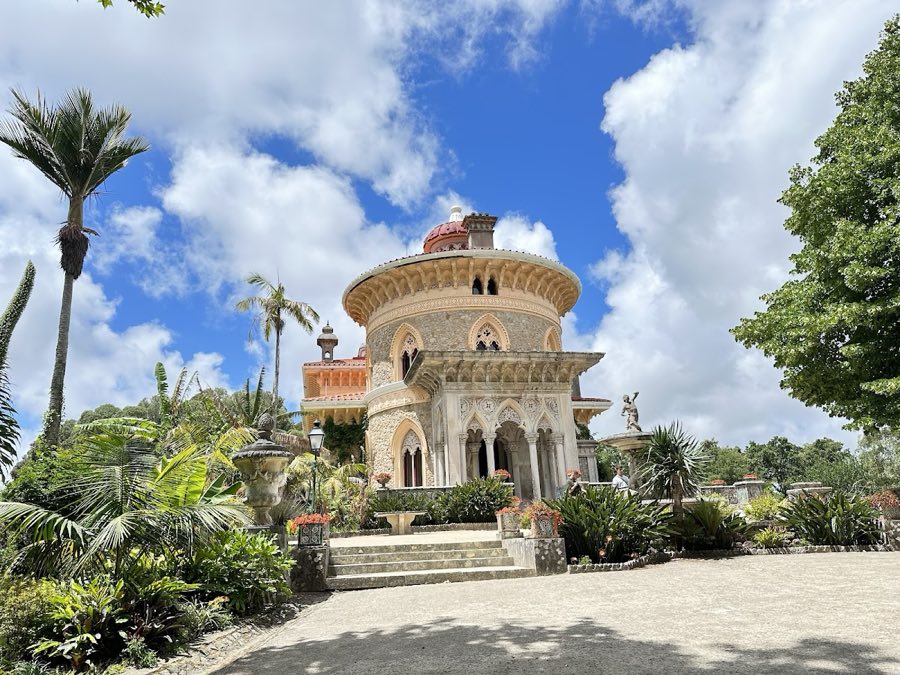
Monserrate Palace is a manor house in Portugal with origins associated with the 19th century.
See all castles in PortugalMonserrate Palace in Sintra, Portugal, is a palatial villa of the 19th century built on ground long used by Portuguese religious communities and later reshaped by a succession of Portuguese and foreign owners. Its visible form reflects Romantic and Moorish revival tastes of the 1800s, and the property sits within the traditional summer retreat area once frequented by the Portuguese court, giving it a sustained role in the region’s social and cultural life.
The hilltop site has been associated with Christian devotion since the medieval period. A local tradition links the first chapel there to Afonso Henriques after the reconquest of Sintra around 1093. A later chapel devoted to Our Lady of Monserrate was established in 1540, and one account names a monk, Gaspar Preto, as erecting a chapel after a pilgrimage to the Catalan shrine of the same name.
During the early modern era the estate belonged to the Royal Hospital of All Saints in Lisbon. Ownership passed in the 1600s to the Mello e Castro family and in 1718 the land was bought by Caetano de Mello e Castro, who is recorded as the thirty‑sixth viceroy of Portuguese India and a knight of the Order of Christ. The Lisbon earthquake of 1 November 1755 destroyed or put the existing buildings beyond use, and the estate subsided into disrepair for several decades.
An English merchant rented the grounds in 1789 and constructed a neo‑Gothic house upon the old chapel ruins. In the 1790s William Thomas Beckford leased the property and began laying out a romantic-style garden that emphasized irregular vistas and exotic planting. The estate drew literary notice when Lord Byron visited in 1809 and referred to Monserrate in Childe Harold’s Pilgrimage.
In the mid‑1800s Francis Cook acquired long-term control of the property, received the hereditary title Viscount of Monserrate from King Luís I, and completed purchase in 1863. He transformed the residence into his family’s summer home and carried out substantial works that blended Romantic sensibilities with Moorish revival and neo‑Gothic motifs, a stylistic choice that consciously echoed the peninsula’s centuries under Muslim rule until the 1200s.
The Portuguese state bought the palace and its hunting lands in 1949. Official heritage protection followed in 1978 when the site was listed as of public interest under national heritage registration number 22672. In 1995 the Sintra mountain landscape, which includes the Monserrate grounds, was inscribed on the UNESCO World Heritage list. A state company created in 2000 assumed management and carried out restoration and recovery programs that brought the palace complex back into use. In recognition of conservation and landscape work, the park received a European Garden Award in 2013.
The ensemble is arranged as a villa set above a terrace that opens onto an extensive landscaped park. The house sits with a dominant central space beneath a main dome, and interior features include a long entrance corridor centered on a fountain and a dedicated library room. An external fountain and a variety of distinctive windows form part of the palace’s visible exterior character. The main building was erected atop the site of earlier chapels, then altered in the nineteenth century; the structure stands after restoration work completed during the early twenty‑first century.
The surrounding park is laid out in a romantic fashion with designed water features and rock settings, including a lake, natural springs, manmade fountains and grottoes. Planting is arranged by geographic origin, so groups of species from different continents appear in separate areas. Notable trees and shrubs present across the grounds include cork oak, araucaria and various palms, tree ferns from Australia and New Zealand, Mexican agaves and yuccas, camellias, azaleas and rhododendrons, and clumps of bamboo representing Japan, together with local strawberry and holly bushes.
A two-hectare farmyard area lies below the main gardens and contains native trees and a flowing watercourse supplied by natural springs. A nineteenth‑century farm house in this zone was renovated to host educational programs and culinary workshops. The farmyard also contains orchards and vegetable plots, sections of wild plants and berry bushes, cereal and aromatic plant beds, pasture areas for horses, donkeys and sheep, enclosures for rabbits and poultry, a picnic zone, an open‑air amphitheatre and a barn. A carved totem, seven and a half metres tall, was worked from a fifty‑year‑old eucalyptus trunk by Welsh artist Nansi Hemming and represents a sequence of regional animals above a relict woodland of oak, arbutus, European holly and ivy‑leaved fern.
Sustainability measures have been installed in the lower estate. An off‑grid renewable energy system added in 2012 combines an air-driven wind generator, a small water turbine and photovoltaic panels to supply power to the farmyard under a biodiversity project supported by European LIFE programme funding. Restoration and ongoing maintenance keep the palace, gardens and associated farm structures in active use and conserved condition.
No. 48536
No. 53098
No. 35258
No. 64594
Comments
Comments for Monserrate Palace will require a verified account before posting.
We'll send a verification link before your first comment is published.