No. 32902
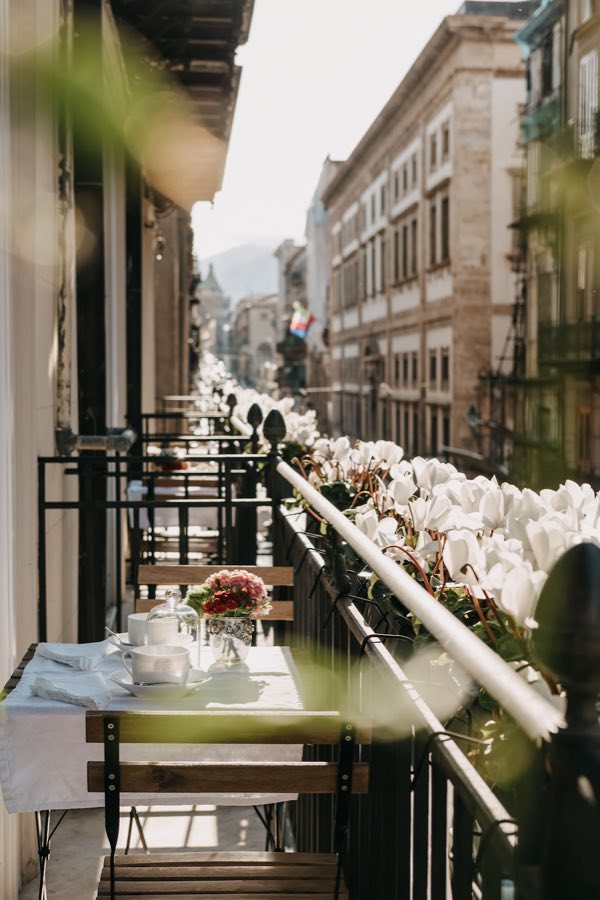
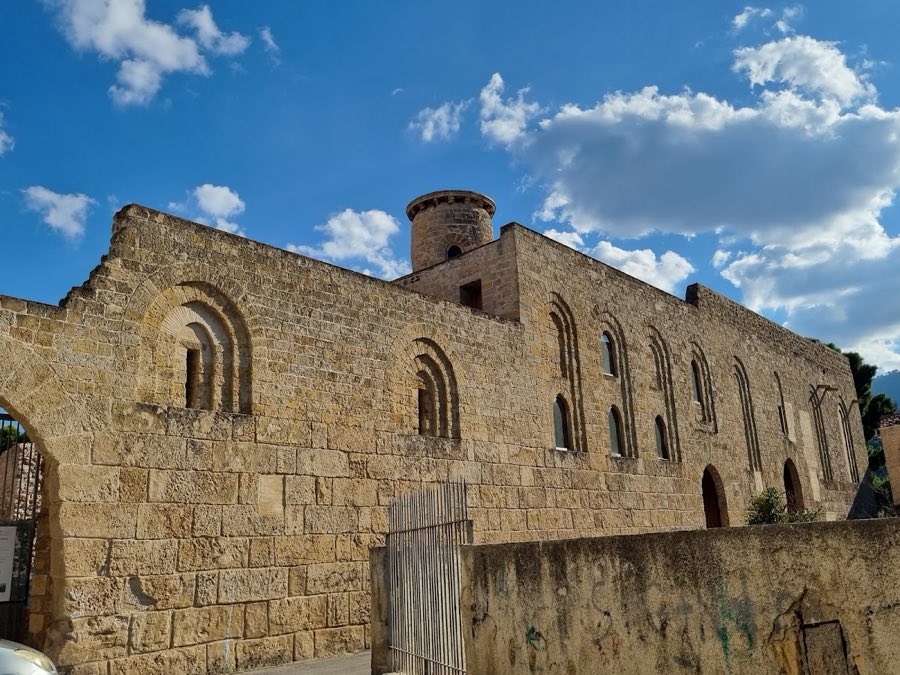
Natoli Palace
Italy
PalaceRestoredFor rent18th century
No. 56032
Palace · Italy
No. 56032 · 38.113 N, 13.356 E
For events
Palazzo Asmundo is marked as a château or castle venue lead. Capacity, indoor/outdoor spaces, catering rules, and accommodation options are published only after public verification.
Event types: Private events, Cultural gatherings, Filming and photography
Quick summary
Palazzo Asmundo is a palace in Italy with origins associated with the 16th century.
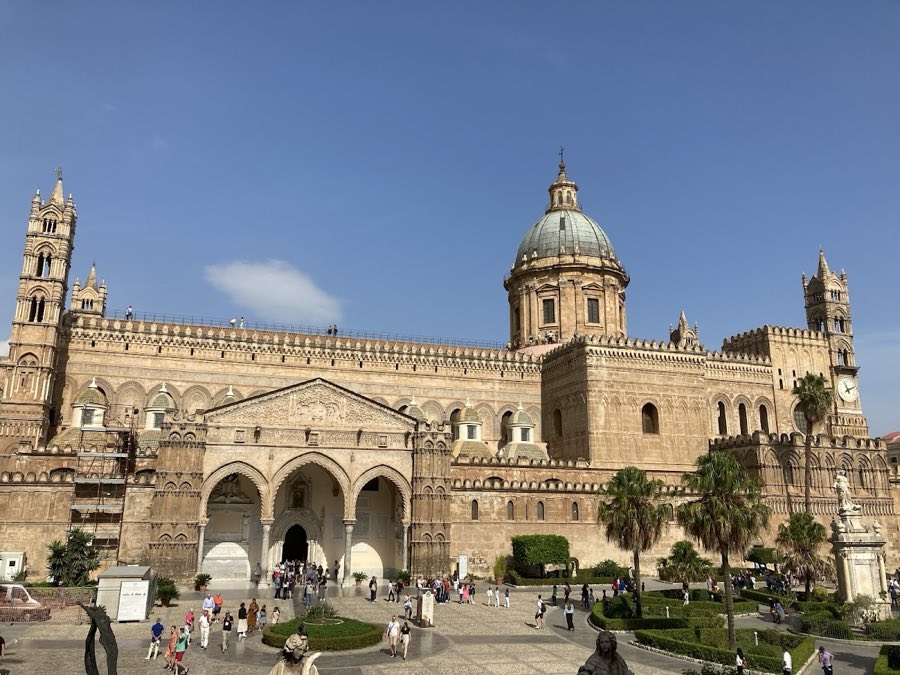
See all castles in ItalyPalazzo Asmundo in Palermo, Italy, is an early modern aristocratic palace begun in 1615 and completed in the high Baroque period, built within the social world of Sicilian noble households. Its construction took place on the historic strada del Cassaro, the main thoroughfare that had been widened and straightened in 1567, and the building became notable for its long construction span, artful interior decoration, and service as a residence for several distinguished families and guests.
Work on the palace began in 1615 and continued in phases for more than a century, reaching completion in 1767. By that year the property belonged to Giuseppe Asmundo, who held the office of Presidente di Giustizia and the title Marquess of Sessa. Before Asmundo’s ownership the building belonged to the Joppolo family, Princes of Sant’Elia. Giuseppe Asmundo inherited the palace from a maternal uncle on the condition that he place Asmundo before Paternò in his surname. In the 1760s he commissioned extensive fresco work in the main reception rooms, a decorative campaign that left a dated and signed cycle on the noble floor.
During the early nineteenth century the palace sheltered displaced royalty. A woman named Maria Cristina, described either as a daughter of Ferdinand III of Sicily or as a daughter of King Ferdinand I of the Two Sicilies, was accommodated there when she left Naples with her husband, the Duke of Genoa and of Sardinia; one account places this reception in 1806, at the time of exile from Naples caused by the Napoleonic army. In the decades that followed the building served as the home of the Turrisi Colonna family; two daughters were born within its walls in 1821 and 1822, Anna (Annetta) and Giuseppina. Anna later worked as a painter and art critic, and Giuseppina became known for her poetry.
In the later twentieth century the palace entered a new phase of private preservation and display. During the 1970s Vincenzo Martorana Genuardi di Molinazzo bought the noble floor and brought together collections that now occupy the house. The property remains in private hands of the Martorana Genuardi di Molinazzo family and is used as a palace that preserves historic interiors while making its rooms and collections available for exhibitions.
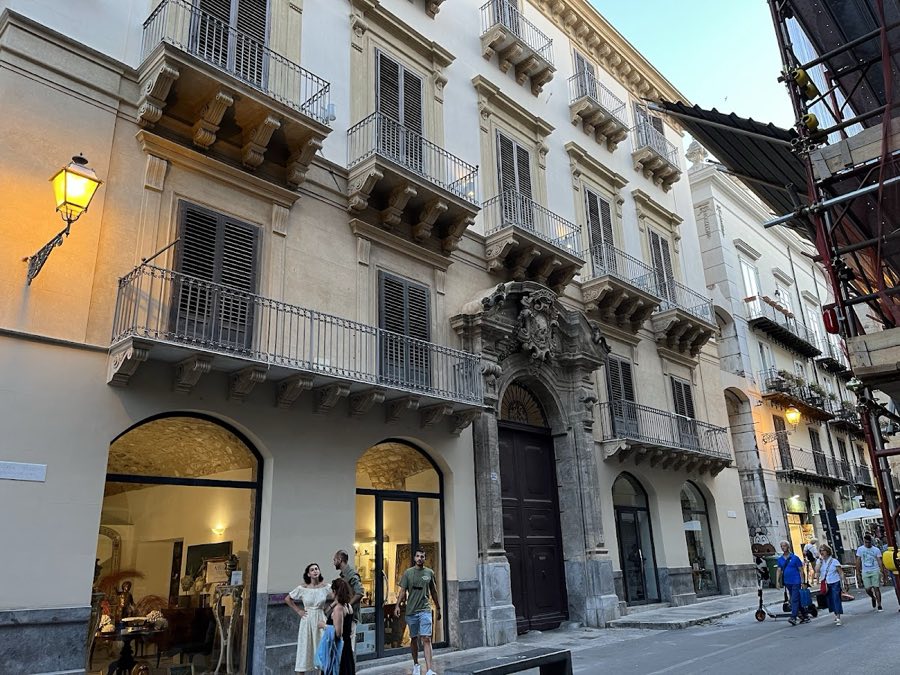
The palace occupies a prominent corner site on via Vittorio Emanuele at Via Pietro Novelli, with its principal façade facing the piazza and garden on the south side of Palermo Cathedral. The street once known as the strada del Cassaro is the same axis on which the building sits; the main entrance appears from Via Pietro Novelli. The structure presents as a late‑Baroque urban residence organized around reception rooms on the noble floor, with surviving fixed furnishings and decorative schemes concentrated on that principal level.
Interior decoration survives extensively. Large mural cycles in the main saloons were executed by Gioacchino Martorana; one fresco carries the date 1764 and the artist’s signature. Stuccowork throughout the principal rooms was produced by followers of Giacomo Serpotta, preserving the plaster relief decoration associated with Sicilian Baroque interiors. The combination of painted ceilings and modeled stucco provides the palace’s dominant visual character and remains largely in place.
Several named rooms preserve explicit iconography. The entrance salone, called the Salone Concerti, displays a painted programme that exalts virtues connected with justice, showing figures such as Fortitude, Temperance, Prudence, Truth and Meekness with their traditional attributes. A room known as the Sala Allegoria presents an allegory of a mythic golden age, with motifs such as a palm, a mirror and bees that the sources connect to Marian and Christological meanings. Another principal salon bears a cosmological fresco showing Mercury, the Earth with the Moon, Mars and Venus arranged beneath a central Sun identified with Christ; this work is dated and signed 1764. The Salone Cattedrale contains a dominant composition with a central divine figure surrounded by figures evoking sanctity, immortality and abundance, and includes symbols described as a triangular alchemical sign, butterflies and a cornucopia, elements characteristically linked in the record to a cryptic‑mercurial Masonic repertoire.
Smaller fixtures and ornaments survive in situ. An eighteenth‑century alcove on the first floor is decorated with playful putti, vine tendrils and pairs of turtledoves. Two commemorative plaques mark historical events associated with the house: one records that Maria Cristina was received there, and another notes the births of Anna and Giuseppina Turrisi Colonna in 1821 and 1822. The interior maintains original fresco and stucco decoration together with preserved movable and fixed furnishings assembled in the twentieth century.
The palace also contains a varied material collection assembled on the noble floor. Holdings include marriage chests dating from the sixteenth and seventeenth centuries, examples of Sicilian ceramics, Neapolitan and French porcelain, embroidered textiles and lace, a historical arms group comprising polearms, blunt weapons, small artillery pieces, a range of firearms and accoutrements, postcards, maps and charts of Sicily, and a numismatic collection. The main façade at street level is fronted by a row of commercial displays and souvenir outlets, while the upper floors retain the historic decorative and movable ensemble.
No. 32902
No. 61819
No. 15901
No. 24838
Comments
Comments for Palazzo Asmundo will require a verified account before posting.
We'll send a verification link before your first comment is published.