No. 61819
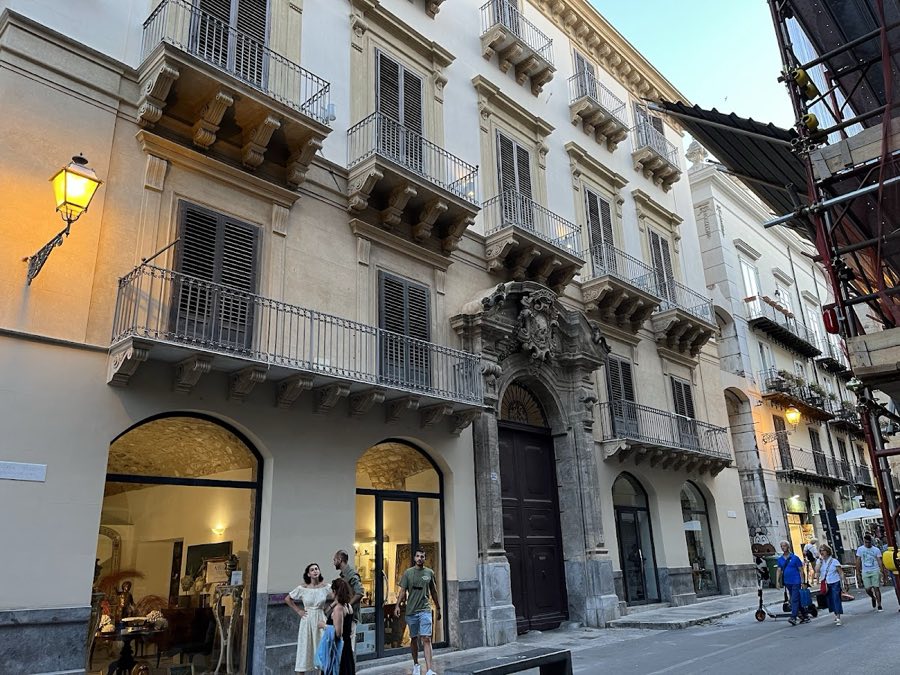
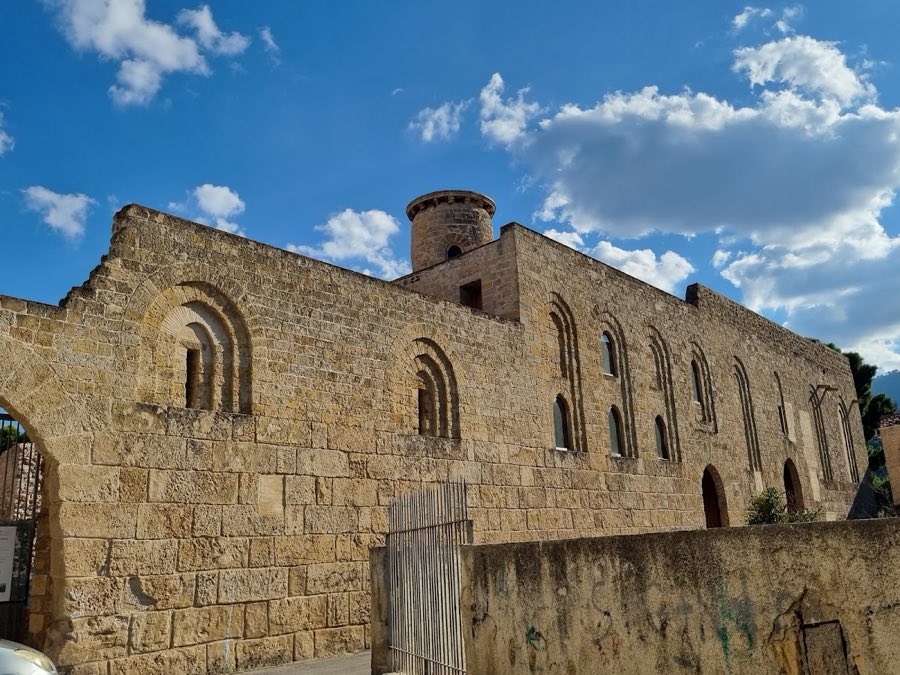
Palazzo Drago Ajroldi
Italy
PalaceRestored18th century
No. 15901
Palace · Italy
No. 15901 · 38.118 N, 13.371 E
For events
Palazzo Butera is marked as a château or castle venue lead. Capacity, indoor/outdoor spaces, catering rules, and accommodation options are published only after public verification.
Event types: Private events, Cultural gatherings, Filming and photography
Quick summary
Palazzo Butera is a palace in Italy with origins associated with the 17th century.
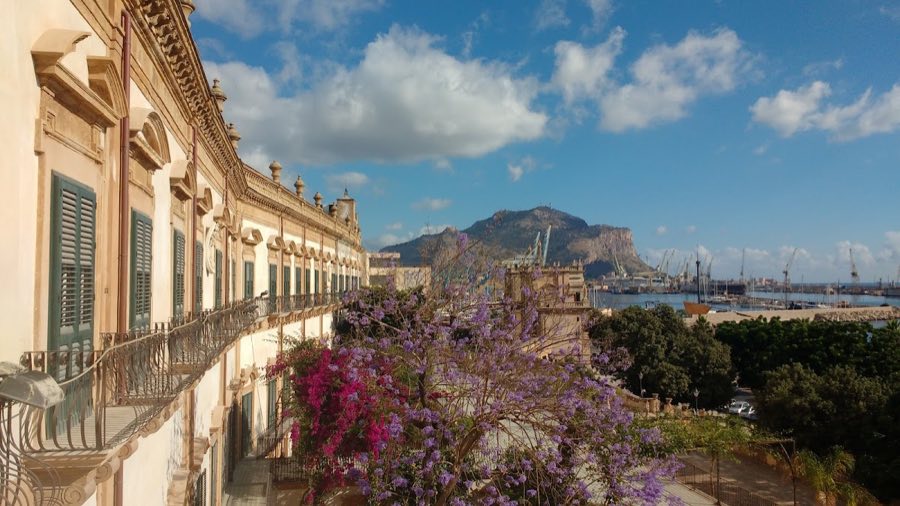
See all castles in ItalyPalazzo Butera in Palermo, Italy is a Baroque urban palace erected for the Sicilian Branciforte noble family beginning in the late seventeenth century. Built by members of the local aristocracy, the palace took shape during a period of lively architectural and artistic activity in Sicily and became one of the seafront residences that linked noble life to the port and the city’s maritime outlook. Over the eighteenth century its size, decoration and social role grew, making it an important address for visitors and a site for public display.
Before 1692 the plot held a large house owned by the Imperatore family. In 1692 Girolamo Branciforte, Marquess of Martini, acquired the property and established a small palace or casino there. During the first half of the eighteenth century the building was enlarged and redesigned, with significant interior decoration undertaken in successive decades that gave it a richly painted and stuccoed program typical of high Baroque taste.
A major turning point came in 1759, when a large fire devastated much of the building. The Branciforte family undertook a broad reconstruction that reworked the internal plan into a formal, courtly arrangement and replaced damaged finishes. In 1760 the palace’s footprint was further expanded by bringing the neighbouring Moncada residence into the complex, a change that allowed the creation of a large ballroom suited to aristocratic entertainments.
Political events touched the house in the later eighteenth century. In 1773 Ercole Michele Branciforte e Pignatelli sided with a local rebellion and was imprisoned by the viceroy Caracciolo. In 1784 a Montgolfier-style hot-air balloon was released from the palace terrace, an episode that underlined the site’s use for public spectacle. The palace also received a series of distinguished visitors over time, among them Johann Wolfgang von Goethe, the painter Jakob Philipp Hackert, the French antiquarian Dominique-Vivant Denon, the artist Jean-Pierre Houel, and the scholar Friedrich Münter.
During the nineteenth century the interiors absorbed neoclassical tastes, with a pictorial campaign attributed to Elia Interguglielmi marking the stylistic shift from late Baroque manner toward neoclassicism. In the twentieth century the princely line passed through Stefania Branciforte into the Lanza family, known as princes of Trabia and dukes of Camastra. Members of that family, including Pietro Lanza Galletti and Giulia Florio d’Ondes, lived in the palace during the Second World War; two sons of the household died in the conflict. After 1950 ownership changed several times, and parts of the building were used by public institutions, including a tourism institute.
Descendants of the Branciforte line retained ownership until the end of 2015. In 2016 Massimo and Francesca Valsecchi purchased the palazzo and funded a comprehensive structural and artistic restoration that began in January of that year. The conservation project repaired and reassembled the interiors and prepared them for display. In spring 2021 the palace reopened with the Valsecchi collection installed and with restored rooms repurposed as exhibition spaces for contemporary art, older paintings, porcelain, glass, furniture and objects.
The palace occupies a long seafront site in the Kalsa quarter, presenting a Baroque façade to the Mediterranean and overlooking the Foro Italico park. A broad terrace, known as the Passeggiata delle Cattive (seafront promenade), sits on top of the base of the former city walls and provides the building with a raised, public-facing platform. The façades were finished in contrasting colours that make the palace’s profile clearly visible from the port.
Entry on the city side comes from Via Butera. A marble staircase rises to the principal floor, and above this approach the Branciforte coat of arms, supported by a lion, marks the family’s ownership. Behind the street façade a suite of state rooms forms an enfilade, a continuous line of connected salons about ten metres long that run along the rear elevation and once served for formal reception.
The expansion that incorporated the neighbouring Moncada house created an ample ballroom for large social gatherings. The interiors display a layered decorative program of fresco painting and stucco work. Wall and ceiling paintings are associated with artists such as Gioacchino Martorana, Olivio Sozzi, and the Interguglielmi brothers, while illusionistic architectural painting, or quadratura, is attributed to Gaspare Fumagalli; stucco modelling was executed by Francesco Alaimo with artisan construction work by Giuseppe Li Gotti. After the 1759 fire the plan was reorganised into an aulic, or courtly, lay-out that later received neoclassical alterations and, in a subsequent phase, rooms such as the so-called Sala moresca were added.
Nineteenth-century painted schemes by Elia Interguglielmi record the movement from late-eighteenth-century mannered decoration toward neoclassical restraint. Over the twentieth century some original maiolica (tin-glazed ceramic) floors were replaced and parts of the eighteenth-century furnishings were sold. Recent conservation returned the rooms to coherent condition, stabilised the structure, and adapted each restored interior as an exhibition gallery; these works culminated in the palace’s public reopening in spring 2021.
No. 61819
No. 32902
No. 56032
No. 24838
Comments
Comments for Palazzo Butera will require a verified account before posting.
We'll send a verification link before your first comment is published.