No. 43966
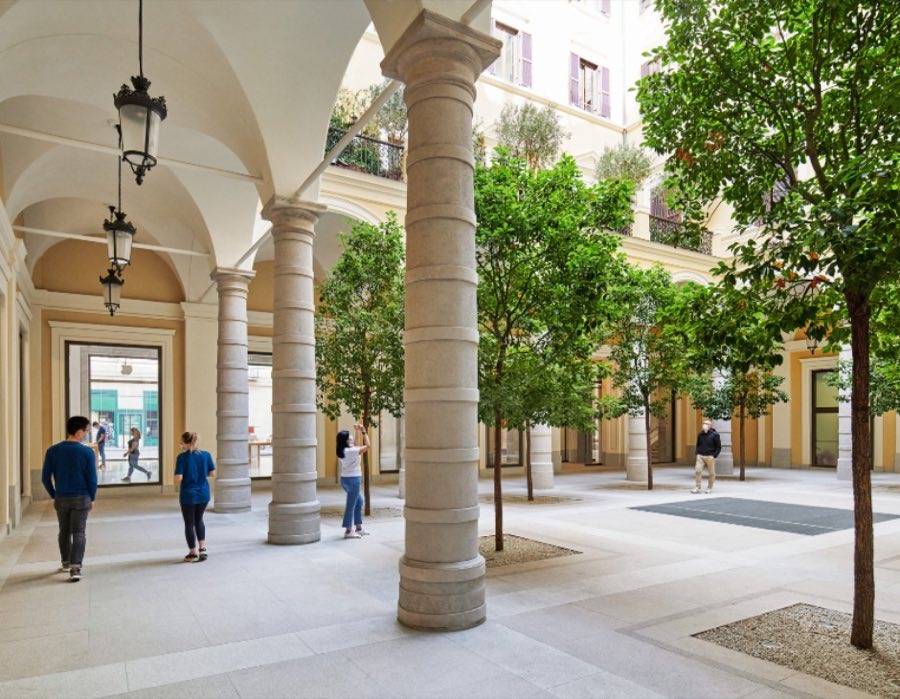
Palazzo Marignoli
Italy
PalaceRestored19th century
No. 26379
Palace · Italy
No. 26379 · 41.901 N, 12.480 E
Quick summary
Palazzo Chigi is a palace in Italy with origins associated with the 16th century.
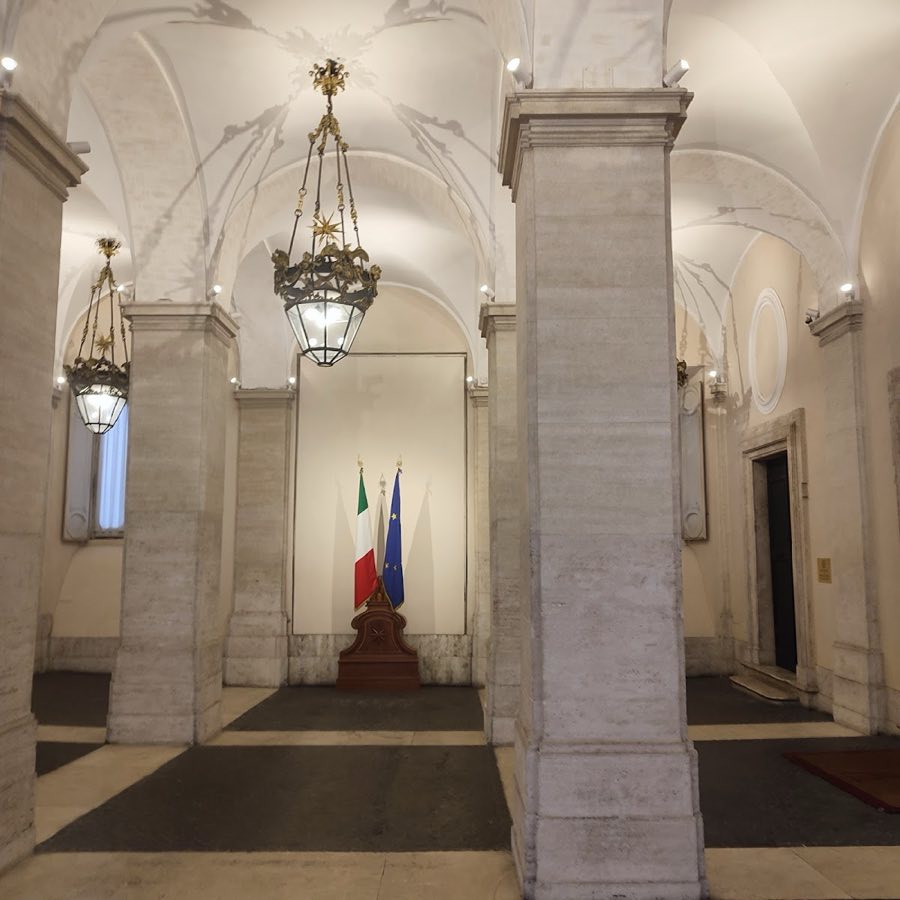
See all castles in ItalyPalazzo Chigi in Rome, Italy, is a grand urban palace erected by builders of the Italian Renaissance in the 16th century, its exterior taking shape in that period and completed by the late 1500s. From its origins in the Renaissance and early Baroque eras the building served as a major urban palace, home to leading aristocratic families and later as a seat of state administration, giving it an enduring role in Rome’s civic and political life.
Construction of the main block advanced through the 1500s, with work attributed to prominent architects of the Roman scene and a building program finished around 1580. In 1578 Pietro Aldobrandini purchased the grouped properties and ordered alterations, including the planning of principal rooms at the corner of Via del Corso and Piazza Colonna that date to the later 16th century. Those early interventions established the arrangement of the main reception floor that survives in large part today.
In 1659 the Chigi banking family, originally from Siena, acquired the palace, and successive owners remodelled interiors during the later 17th century. Major changes for the Chigi household included an elaboration of the stair and state apartments and the foundation of a family library, assembled in the late 1600s and enriched with manuscripts from Pope Alexander VII. Negotiations in the 20th century led to transfer of that library collection to the Vatican after discussions involving Pope Pius XI and Benito Mussolini.
Across the 18th and 19th centuries the palace remained a noble residence and at times housed foreign legations, serving as the seat of several embassies. On 20 April 1770 Wolfgang Amadeus Mozart performed there before Charles Edward Stuart. In the early 20th century the Italian government exercised a right of pre-emption under a 1909 law protecting important artworks and bought the palace in 1916. The state first installed the Ministry of the Colonies and, from 1922, the Ministry of Foreign Affairs.
From 1922 Benito Mussolini, serving as Minister of Foreign Affairs and head of government, kept an office in the building, using the corner Galleria Deti as a study and addressing early public meetings from its balcony. A planned assassination connected to Mussolini’s presence at the palace was foiled on 4 November 1925, when the deputy Tito Zaniboni was arrested before acting. On 29 March 1961 the palace was designated the official seat of the Italian government, and Aldo Moro made regular use of the address from 1963 onward. The complex underwent an extensive restoration completed on 7 November 1999, which included façades and principal interiors and restored historical room arrangements. A modern violent incident occurred on 28 April 2013, when Luigi Preiti opened fire outside the palace during the swearing-in of the Letta government, wounding two carabinieri, Giuseppe Giangrande and Francesco Negri, and a pregnant passerby.
The palace occupies a regular rectangular plan between Via del Corso and Piazza Colonna, standing beside Palazzo Montecitorio. The main entrance faces Via del Corso while the best-known façade looks onto Piazza Colonna. The building rises to five storeys, and its principal reception level is the piano nobile (the main or noble floor), which contains the official state rooms and the prime minister’s offices.
An entrance created from Piazza Colonna in 1740 leads into an inner courtyard of honour paved around a travertine fountain that bears the Chigi coat of arms. The fountain is attributed to Jacopo della Porta and sits at the courtyard’s centre. From that open court visitors ascend an imposing main stair to the piano nobile; the stair, built for the Chigi household in the later 17th century, is richly carved, displays the family heraldry, and is lined with sculptural elements including Roman sarcophagi and large bronze lanterns of the period.
The group of state rooms at the corner of Via del Corso and Piazza Colonna corresponds broadly to the late 16th-century layout established under the Aldobrandini ownership. The prime minister’s study is a restrained chamber with simple 17th-century friezes; behind the desk hangs a preserved Sant’Agnese by Domenichino, itself a copy of a Titian original. Above the door leading to the Galleria Deti restorations uncovered a 17th-century image of Jonah and the whale.
The Council of Ministers Hall faces the central balcony on Via del Corso and serves as the principal deliberative room. Its walls are hung with four tapestries in the Rubens manner, and a 16th-century wooden choir transferred from the family’s former chapel stands within the space. A white marble fireplace of the late 1700s and a ceiling showing exposed wooden beams are matched by a decorative frieze dated 1665 by Johann Paul Schor.
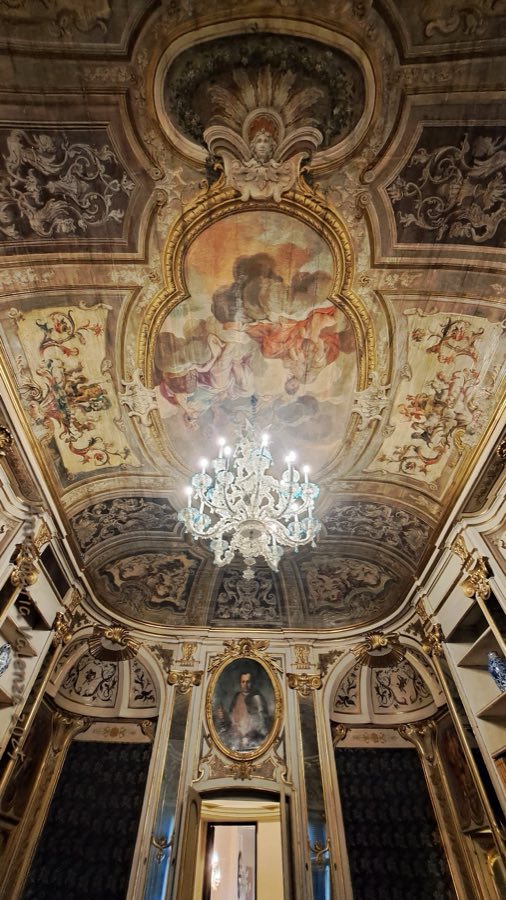
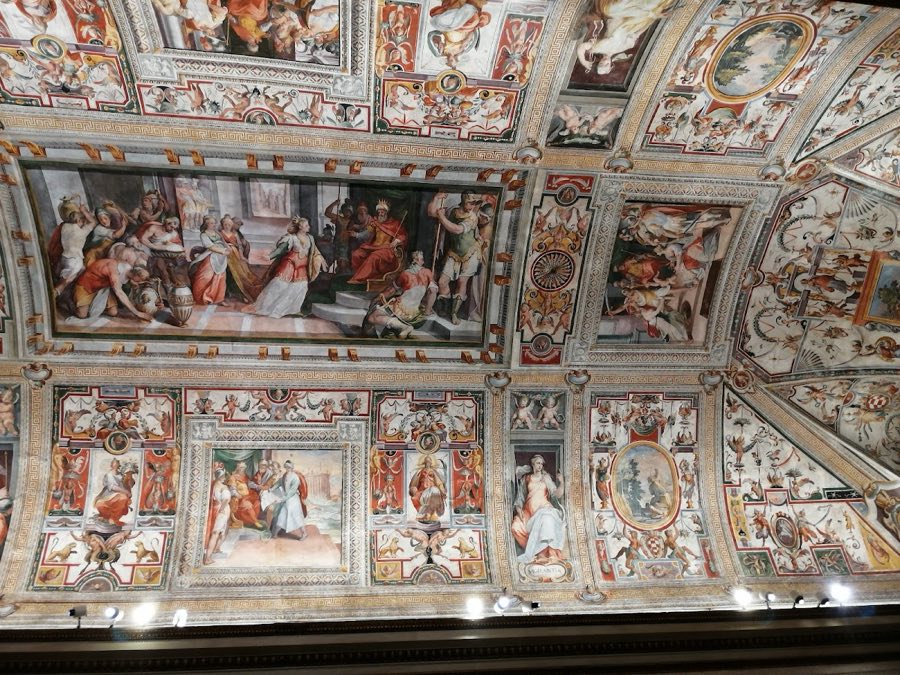
The Galleria Deti, occupying the corner between the two streets and named for Cardinal Giovanni Battista Deti, is lavishly ornamented with gilded stucco and a cycle of frescoes showing biblical and heraldic themes painted around 1616–1625 by Flaminio Allegrini. Historically the room served as the study of Benito Mussolini when he held foreign ministerial office. Nearby, the Antechamber of the President, which faces Piazza Colonna, contains a painted frieze with small narrative panels recounting episodes from the life of Cardinal Pietro Aldobrandini, an 18th-century fireplace with a mirror above it, 18th-century Roman salon furnishings, and a 16th-century Brussels tapestry.
The Hall of the Galleys received decorative additions in the 20th century, including five white stucco bas-reliefs of galleys set above doorways in 1917. The room features a richly modelled cornice incorporating seventy-two distinct female faces meant to represent the peoples of the world, an 18th-century–style Murano glass chandelier, two large canvases by Giovan Battista Pace after Cavalier d’Arpino, and two terracotta figures titled Day and Night by Bartolomeo Cavaceppi dating to the 1700s. A copy of Raphael’s fresco showing Pope Leo I meeting Attila is also displayed there.
The Hall of the Four Seasons, also called the Hall of the Globes, functions as the antechamber to the Council room. Two 17th-century globes, one celestial and one terrestrial, stand either side of the doorway into the Council room. The room shows 18th-century mirrored doors with gilded carving and received neoclassical decorative work in 1857; frescoes depict the four seasons along with allegorical figures. Overall decorative materials throughout the palace include gilded stucco, Murano glass, terracotta sculpture, intarsia inlaid floors, white marble fireplaces, wooden beam ceilings with painted lacunaria (coffered ceiling panels), tapestries, and large oil paintings.
Conservation work completed in 1999 repaired façades and returned principal interiors to their historic arrangements where records permitted. Individual rooms retain varying states of original fabric and later additions, but the palace presents a coherent sequence of ceremonial spaces from the courtyard and grand stair to the piano nobile reception suite.
No. 43966
No. 26381
No. 90590
No. 95986
Comments
Comments for Palazzo Chigi will require a verified account before posting.
We'll send a verification link before your first comment is published.