No. 26379
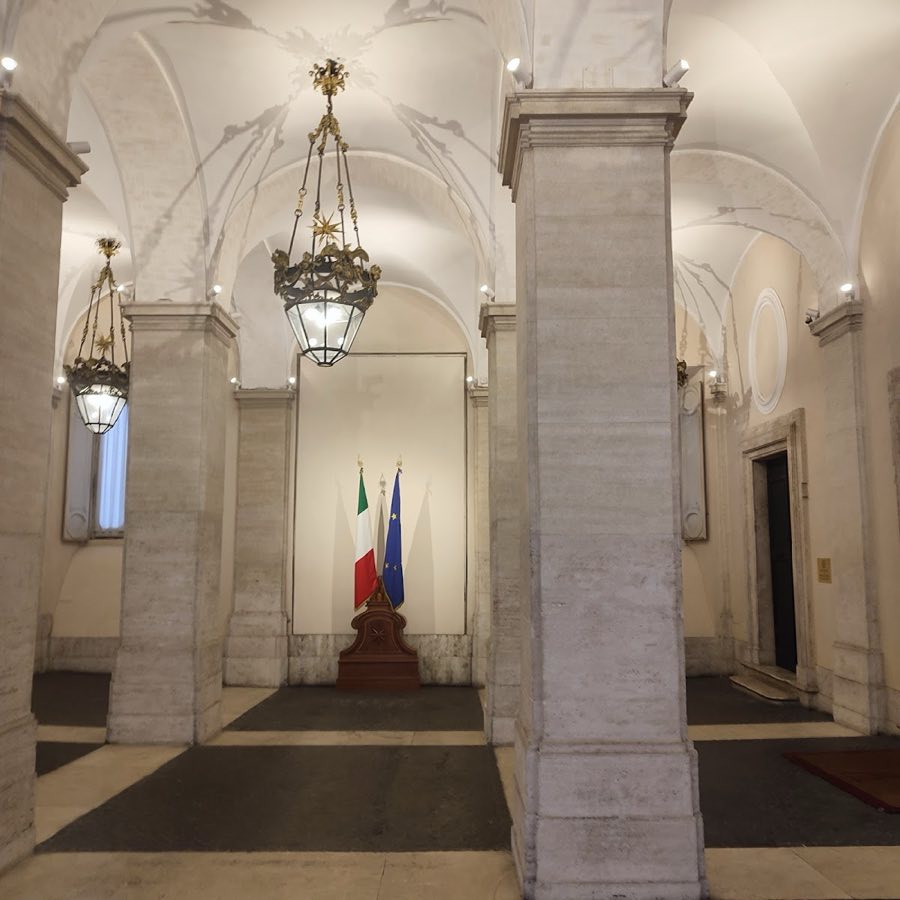
Palazzo Chigi
Italy
PalaceRestored16th century
No. 26381
Palace · Italy
No. 26381 · 41.900 N, 12.481 E
Quick summary
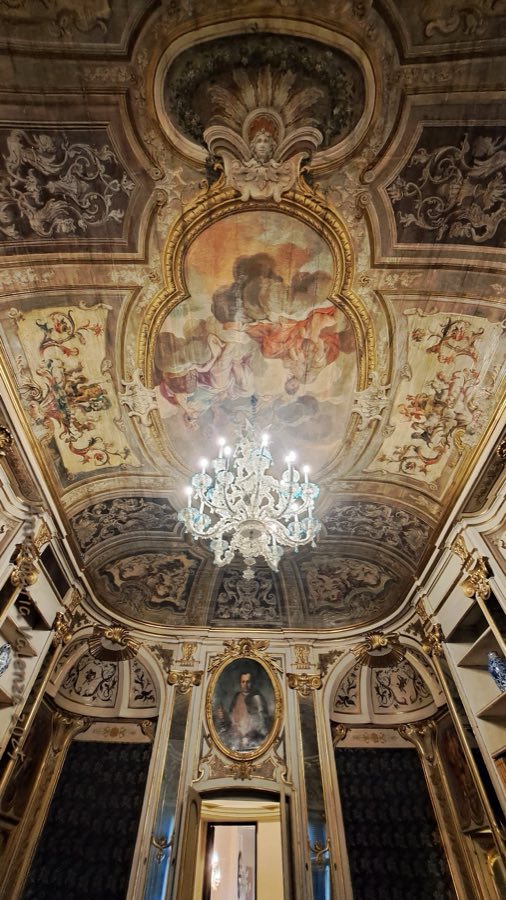
Palazzo Sciarra Colonna di Carbognano is a palace in Italy with origins associated with the 17th century.
See all castles in ItalyPalazzo Sciarra Colonna di Carbognano in Rome, Italy, is an urban palace built by the Colonna di Sciarra branch of the Italian nobility, whose main rebuilding took place in the late 1500s and the early 1600s with later interventions in Baroque and 18th‑century Rococo (late Baroque ornamental style). The site has been the Colonna family’s principal city residence for centuries and later grew into a linked complex that included a covered shopping passage and a theatre, making it a prominent presence along what was once called the Piazza di Sciarra on the line of Via del Corso.
The property was acquired in 1538 from Vittoria Colonna and replaced or rebuilt for the Colonna di Sciarra across the turn of the 17th century. The block originally comprised two connected dwellings belonging to different branches of the family: a larger palace and a smaller “palazzetto” or old palace. Work on the ensemble continued into the first half of the 1600s, with construction activity noted up to 1641.
In 1641 excavations near the palace unearthed remains of the Arch of Claudius, part of the Aqua Virgo aqueduct. During the 1700s the complex received attention: interiors were redecorated in the Rococo manner for Cardinal Prospero Colonna di Sciarra, and the smaller palazzetto was rebuilt after a fire in 1788. At the north end of the site an 18th‑century arch, the Arch of Carbognano, was erected to provide access toward Via delle Muratte.
The later 19th century brought major alterations to the property and its urban setting. Between the 1870s and 1898 the owners shortened a wing to widen the new Via Marco Minghetti, built the adjoining Teatro Quirino, and created the Sciarra Gallery, a covered, glass‑roofed passage that crosses an inner courtyard and connects to the palace. A comprehensive transformation of the palace and its courtyard took place in 1875 and continued in subsequent decades; interior decoration in the upper floors included fresco programs in the Art Nouveau manner. At the end of the 1800s the smaller palazzetto was demolished to make way for Via Marco Minghetti, and the Arch of Carbognano was removed during 19th‑century works.
Financial troubles for Prince Maffeo Sciarra led to the dispersal and sale of a substantial sixteenth‑century art collection in 1891–1892 and to the auction of the palace in 1898, when it passed into banking ownership. The Colonna branch archive kept at the palace was transferred to the Vatican Apostolic Library in 1913. Ownership continued to change in the 20th century; the building entered 20th‑century banking hands and was eventually restored between 1980 and 1987. The palace was physically merged with the neighbouring theatre and the glass‑roofed gallery and now houses the Fondazione Roma; the foundation opened the Museo del Corso in the palace on 27 November 2024 to display its collections.
The palace complex presents a courtyard‑centred plan that grew by accretion as the family adapted two original houses into a single urban palace. The principal frontage faces a stretch of Via del Corso formerly known as the Piazza di Sciarra. The main façade is restrained and has been linked to a late Renaissance hand. Its high central portal, known as the portal of Carboniani, has long attracted attention because tradition held it to be carved from a single block of marble, and the doorway has been associated with the elevation of the Palestrina fief to a principality in 1571. The portal’s sculptural quality and its celebrated monolithic reputation are part of its recorded identity, though precise authorship remains uncertain.
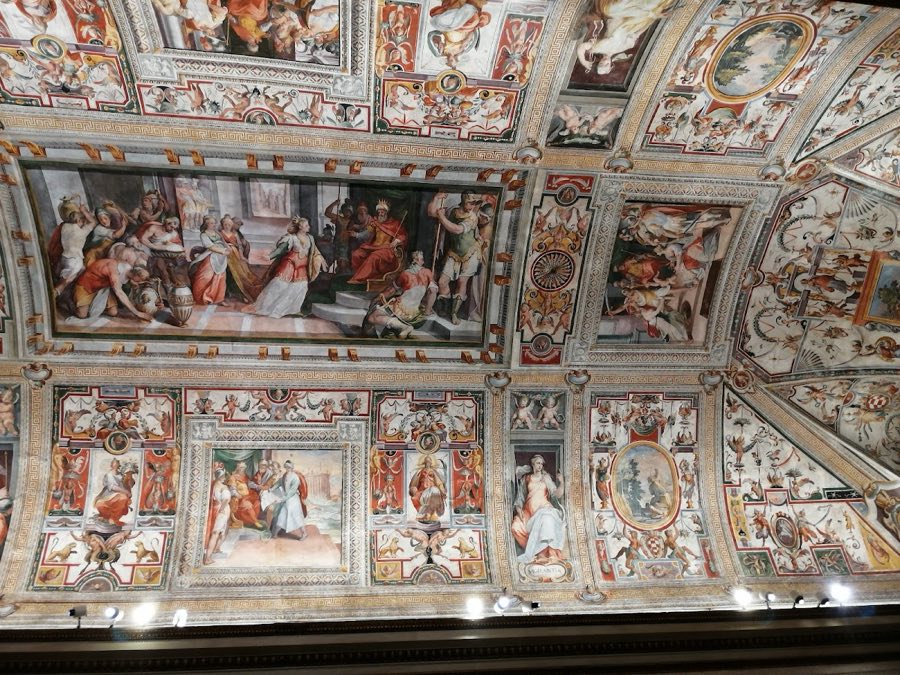
The Sciarra Gallery is a striking later insertion that traverses an internal courtyard beneath a glass dome. Built in the late 1800s and physically attached to the palace, the passage functions as a covered urban walkway and is notable for the painted decoration that covers its courtyard walls. Upper‑floor decoration in the gallery follows the Liberty, or Art Nouveau, style and consists of frescoed scenes that portray everyday activities together with personifications of female virtues such as Prudence, Strength, Patience and Generosity. These wall paintings form the gallery’s principal decorative attraction.
Several interior rooms retain high‑style 18th‑century work. A Library and a Mirrored Cabinet were executed in the Rococo manner for Cardinal Prospero Colonna di Sciarra; other rooms were frescoed during the same 18th‑century refurbishment. These spaces display the palace’s period interior character and were later integrated into 19th‑century decorative schemes when the gallery and adjoining theatre were added and when upper‑floor fresco programs in Art Nouveau taste were introduced.
Archaeological remains associated with older Roman infrastructure have been found in and near the palace. Fragments of the Arch of Claudius, a structure tied to the Aqua Virgo aqueduct, were discovered in 1641; some of those fragments lay within the palace cellars until they were exposed again in 1897. At the north end of the site an 18th‑century Arch of Carbognano once provided a street entrance toward Via delle Muratte; that arch was removed in the 19th century during urban remodelling. The smaller palazzetto that once formed part of the complex was rebuilt after the 1788 fire and then taken down at the end of the 1800s to allow the opening of Via Marco Minghetti.
The complex underwent conservation and repair at the end of the 20th century, which restored and stabilised both the palace interiors and the attached gallery and theatre. The palace, the glass‑roofed passage and the theatre now stand as an integrated group that preserves elements from the late Renaissance through the Art Nouveau period, with archaeological fragments of the Roman aqueduct revealed in the palace cellars during the course of nineteenth‑century works.
No. 26379
No. 90590
No. 43966
No. 95986
Comments
Comments for Palazzo Sciarra Colonna di Carbognano will require a verified account before posting.
We'll send a verification link before your first comment is published.