No. 96480
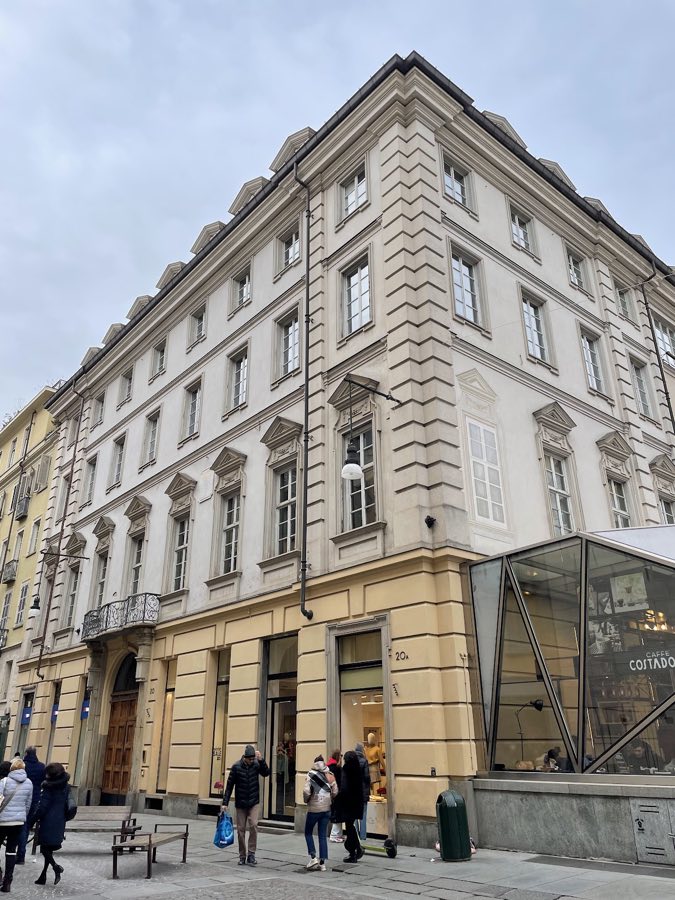
Palazzo Bricherasio
Italy
PalaceRestoredFor events17th century
No. 11612
Palace · Italy
No. 11612 · 45.066 N, 7.686 E
For sale
Palazzo del Carretto di Gorzegno in Italy is marked with a public sale signal. Asking price, tenure, land area, floor area, and room counts are shown only after public verification.
Status: Public sale signal
Price: Price on application or not publicly verified
Property type: Palace
Notable features: Restored historic fabric, Hospitality use, Residential use
Availability note: Submit an official public listing or register buying interest to complete the sale record.
For rent
Palazzo del Carretto di Gorzegno is marked for bookable castle accommodation. Nightly pricing, sleeps count, stay rules, and amenities are displayed only when public operator data is available.
Rental type: Hotel / bookable stay, Short-stay rental
Short-term availability: Bookable accommodation signal
Quick summary
Palazzo del Carretto di Gorzegno is a palace in Italy with origins associated with the 17th century.
See all castles in ItalyPalazzo del Carretto di Gorzegno in Turin, Italy, is a 17th-century urban palace erected during the Savoyard period and associated with the eastward enlargement of the city under King Charles Emmanuel II. Built as part of the urban development that pushed the city toward the Po River, the palace gained importance through its location on the historic island of the Assumption, a site that later became Via Maria Vittoria, and through successive ownership by senior officials of the Savoyard state.
Construction began after the land was put up for sale in 1686 and the palace reached completion in 1689 under Count Francesco Giacinto Gallinati, who served as controller-general of finances for the kingdom. The property occupied a parcel that had once belonged to the family of Giovanni Bernardino Fornelli of Bussoleno, a notary, and stood near other prominent residences created during the same phase of civic expansion.
During the 18th century the building changed hands several times. In 1756 it passed to Count Vittorio Felice Caissotti di Chiusano, a courtier who held the post of Governor of Susa and later became a general commanding infantry in the Sardinian army; while he owned the house he added an extra floor to bring its height into line with a neighbouring palazzo. In 1768 Marquis Carlo Tete Del Carretto di Gorzegno acquired the palace and carried out further modifications to the main floor and, later in 1796, added an upper storey, giving parts of the interior a Baroque character.
In the 19th century heirs sold the property in 1866 to Count Luigi Biandrate di San Giorgio for 110,000 lire, with an additional 2,000 lire recorded for furniture. The building entered the 20th century in private hands and in 1916 passed to Albina Gianoli, wife of the lawyer and local historian Ferdinando Rondolino, after purchase from the daughters of Biandrate. The provincial government bought the palace in 1972 for 170 million lire and adapted its function for public use, carrying out substantial alterations to serve administrative needs.
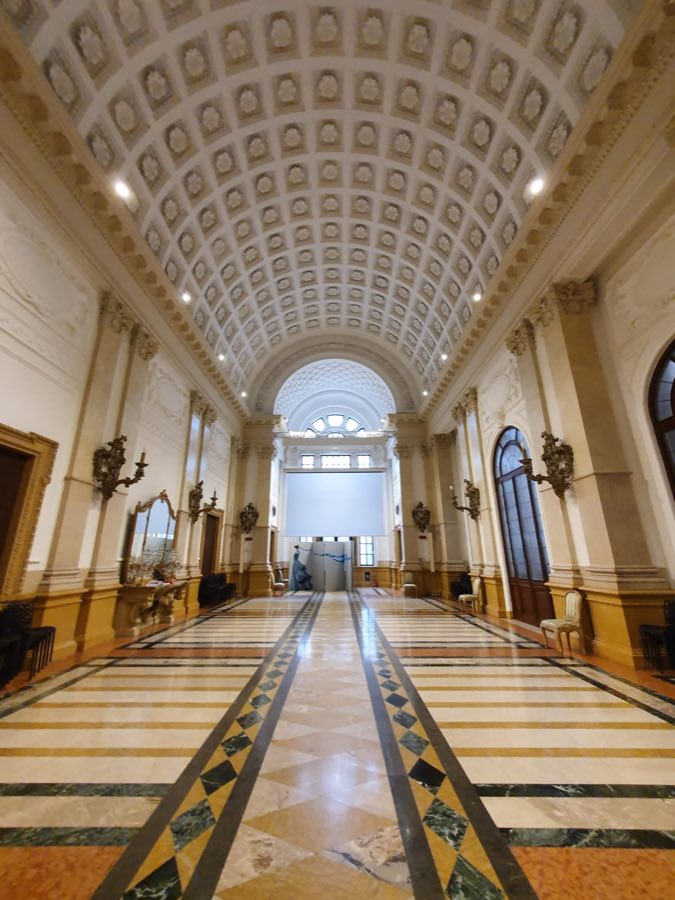
The palace suffered a damaging fire in 1995 and was subsequently restored with care. In 2017 the principal floor, the piano nobile (main floor), was converted to an extra-hotel arrangement of six suites, and the former ballroom was transformed into a contemporary art gallery. The building is included among properties recognised by UNESCO.
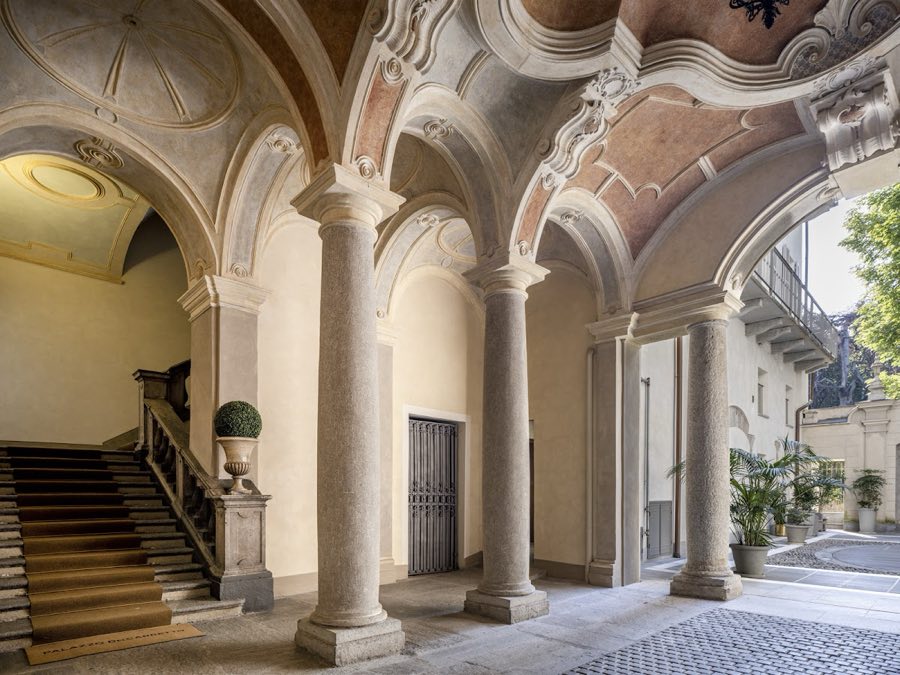
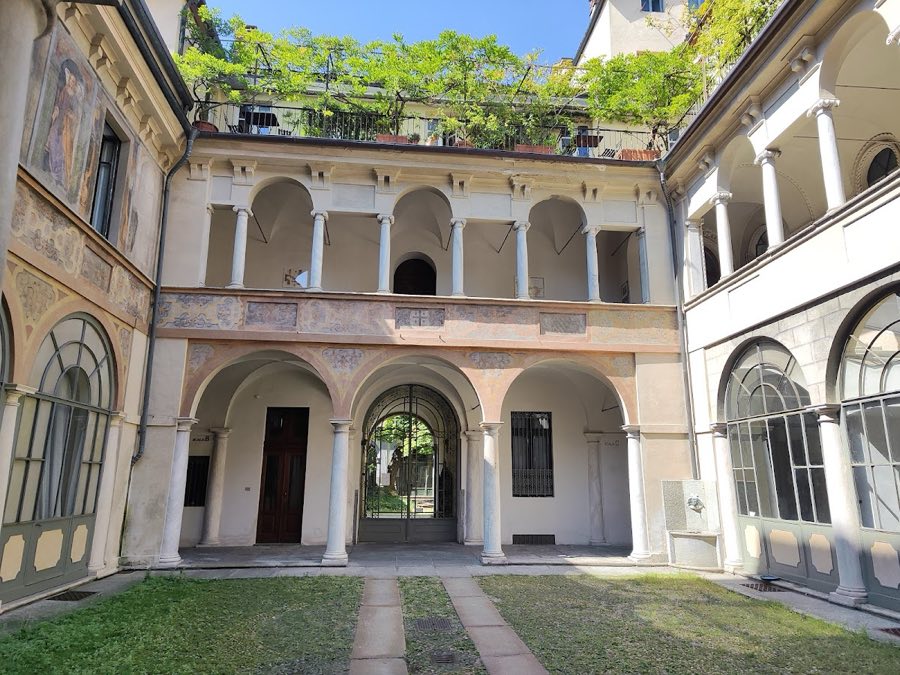
The palace has a C-shaped plan that opens toward the rear garden shared visually with the neighbouring Palazzo Dal Pozzo della Cisterna. Movement through the house follows a deliberate procession that begins at the street entrance and continues through a corridor (andito, entrance passage), into the large entry hall (androne, main entrance hall), then into an enclosed courtyard and finally out to the garden. The courtyard sits within enclosing walls topped by small pinnacles and contains a fountain, forming a sheltered central space around which the main rooms are arranged.
The exterior presents a restrained, elegant frontage while the interiors display refined finishes. Decorative work from the original late 17th-century phase survives, notably painted friezes and large mural scenes in the former ballroom and in at least one suite. These painted schemes include emblems, heraldic achievements and landscape scenes set beneath ceilings that feature exposed beams ornamented with rosettes. Part of the residence was remodelled in a Baroque manner during the Del Carretto ownership, which is visible in the layout and some interior decorative choices.
Later interventions have altered the building’s use and condition. The provincial restorations carried out after the 1972 acquisition reorganised spaces for administrative functions, and careful conservation followed the fire in 1995. Most recently the main floor has been adapted to host six guest suites and the former ballroom now houses a modern art gallery, showing the continued layered reuse of the palace while retaining its principal sequence of entrance, courtyard and garden.
No. 96480
No. 49619
No. 30281
No. 94580
Comments
Comments for Palazzo del Carretto di Gorzegno will require a verified account before posting.
We'll send a verification link before your first comment is published.