No. 94580
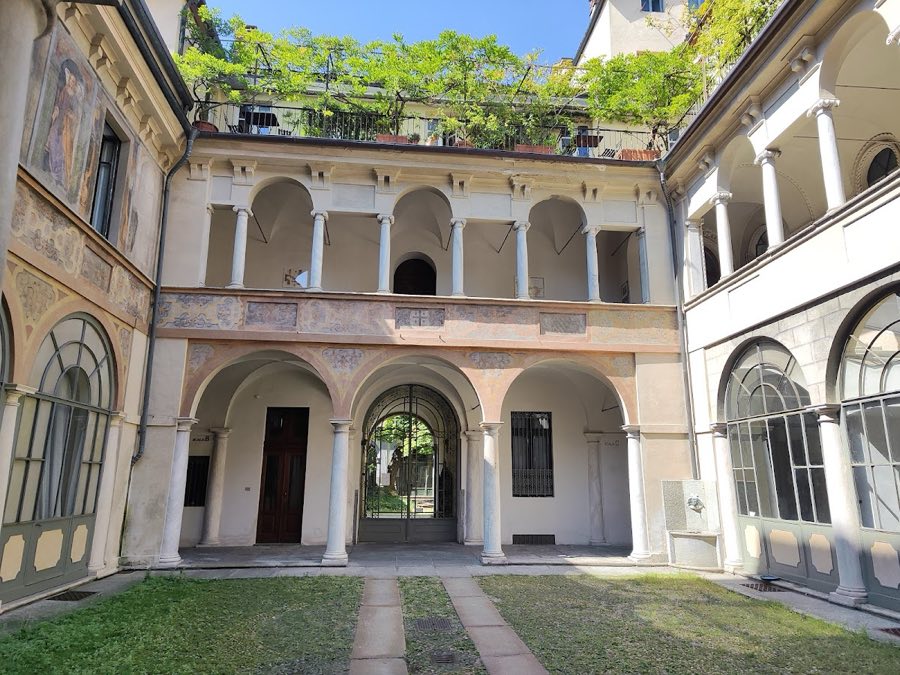
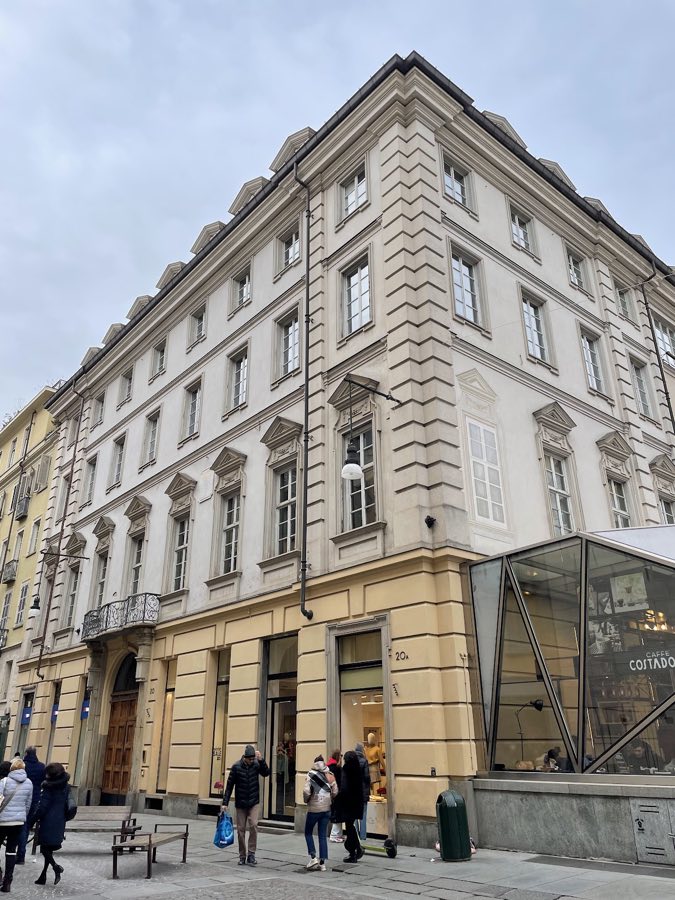
Palazzo Scaglia di Verrua
Italy
PalaceIntact16th century
No. 49619
Palace · Italy
No. 49619 · 45.073 N, 7.686 E
Quick summary
Royal Palace of Turin is a palace in Italy with origins associated with the 17th century.
See all castles in ItalyThe Royal Palace of Turin in Turin, Italy began life as an episcopal residence built for the city’s bishopric. Its fabric and role were reshaped from the sixteenth century when the duke Emanuele Filiberto I of Savoy moved his seat from Chambéry to Turin and established the building as a ducal residence. Work on the core complex took place between the late 1500s and the 1600s, and successive rebuilding and expansion across the seventeenth and eighteenth centuries made the palace a central seat of Savoyard government and ceremony, including the construction of a dedicated chapel for the Holy Shroud.
Until the mid-1600s the palace retained its ecclesiastical origins while being adapted to princely use. Major rebuilding followed damage sustained during the siege of 1640, and the principal elevation was completed in the 1650s. A separate chapel for the Shroud was added in the later 1600s, physically joining the palace to the cathedral. During the eighteenth century the royal household commissioned significant remodelling of staircases and state apartments and created new spaces for court functions and large public occasions.
The Napoleonic period, around 1799 to 1815, removed the Savoy court from Turin; the royal family went into exile and the court temporarily used the Royal Palace of Cagliari. The palace gardens were stripped and degraded during this time, and the grounds acquired the name Parco Imperiale in 1805. Nineteenth-century work included restoration and redecoration for ceremony and display, the creation of monumental gates and sculptures at the southern approach, and the formal opening of the Royal Armoury in the 1830s.
The palace remained a principal royal residence through the Risorgimento and the decades around Italian unification, serving the dynasty until roughly 1865 and later being converted to public museum use. The collapse of the monarchy in 1946 led to a period of neglect for some apartments and wings, followed by substantial mid-twentieth-century restoration campaigns to repair and refit important suites. The complex is part of the group inscribed as the Residences of the Royal House of Savoy on the World Heritage List and since 2016 it has been administered together with adjacent collections as part of the Musei Reali.
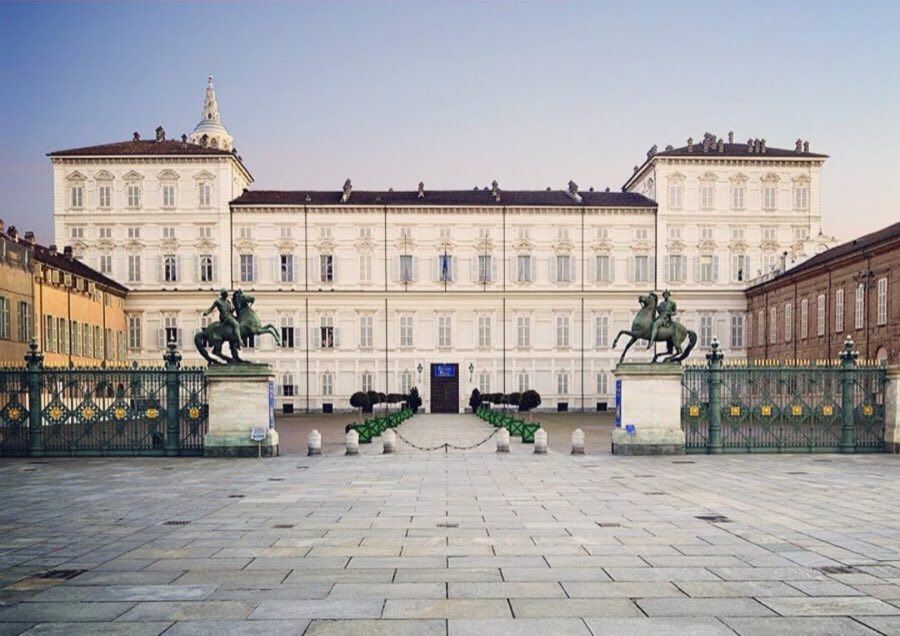
The palace occupies the Piazzetta Reale beside Piazza Castello, forming one side of a central civic ensemble from which main streets radiate. The principal facade runs for roughly one hundred seven metres and rises to an average height near thirty metres. Its composition presents a central block with two taller end pavilions, and the western elevation is visibly interrupted by the mass of the Chapel of the Holy Shroud, which projects above the line of the main frontage.
The Chapel of the Holy Shroud, added in the late 1600s (dates given around 1688–1694), occupies the palace’s western wing and connects to the cathedral apse. Its roof is described as a spiralled dome, and the chapel was built specifically to house the Shroud. The chapel physically alters the palace silhouette and forms a major vertical element on the western side.
Vertical circulation is dominated by a large double-ramp marble flight known as the Scala delle Forbici (Scissors Staircase), an eighteenth-century intervention designed so that its weight rests on the outside walls rather than on the underlying wooden floors. The staircase opens to the rear courtyard with large windows and serves as a ceremonial approach to the main floor, allowing grand arrivals without overloading earlier structural timber.
The main floor, or piano nobile, contains the palace’s key representative chambers. These include the Great Ballroom hung with tapestries illustrating Don Quixote, the small Beaumont gallery, the Chinese Sitting Room, the Winter Apartment of the King, and the Throne Room. A suite of three antechambers (Tre Anticamere), functioning as guard and attendant rooms, leads toward the princely apartments. Adjacent to the Royal Armoury are the apartments once assigned to the Duke of Aosta.
Furniture and interior fittings reflect high eighteenth-century court taste. A Chinese cabinet and a private cabinet for secret state business feature painted vaults by Claudio Francesco Beaumont and elaborate carved wall panelling. Two monumental furniture pieces by master cabinetmaker Pietro Piffetti, each standing over three metres high and executed in precious woods with ivory, mother-of-pearl and bronze, appear in inventories and descriptions of the palace interiors.
The Royal Armoury occupies a northern wing facing the main square and was inaugurated by King Charles Albert in 1837. The collection includes sixteenth- and seventeenth-century armours, tournament armour associated with Emmanuel Philibert, the equestrian armour of Charles Emmanuel I, a pistol linked to Charles V, about two hundred fifty flags, and a section of Oriental weapons and armour. The armoury complex incorporates a large staircase of the mid-eighteenth century, a rotunda, the Beaumont gallery, and a medal room added in 1839.
The southern approach is enclosed by a nineteenth-century gate and railwork completed by Pelagio Palagi and finished with cast statues of the Dioscuri by Abbondio Sangiorgio. A balustrade dated to 1660 is set along the palace edge and is attributed to two seventeenth-century carvers. Behind the palace, the royal gardens were laid out in the late 1600s to designs linked to the great French garden tradition and executed with basins, pathways, fountains and statuary. The grounds suffered loss of sculpture and fittings during the Napoleonic years, were designated Parco Imperiale in 1805, and later saw restoration of eighteenth-century statues and large commemorative vases, with additional nineteenth-century marble monuments placed by Victor Emmanuel II.
No. 94580
No. 11612
No. 30281
No. 96480
Comments
Comments for Royal Palace of Turin will require a verified account before posting.
We'll send a verification link before your first comment is published.