No. 18435
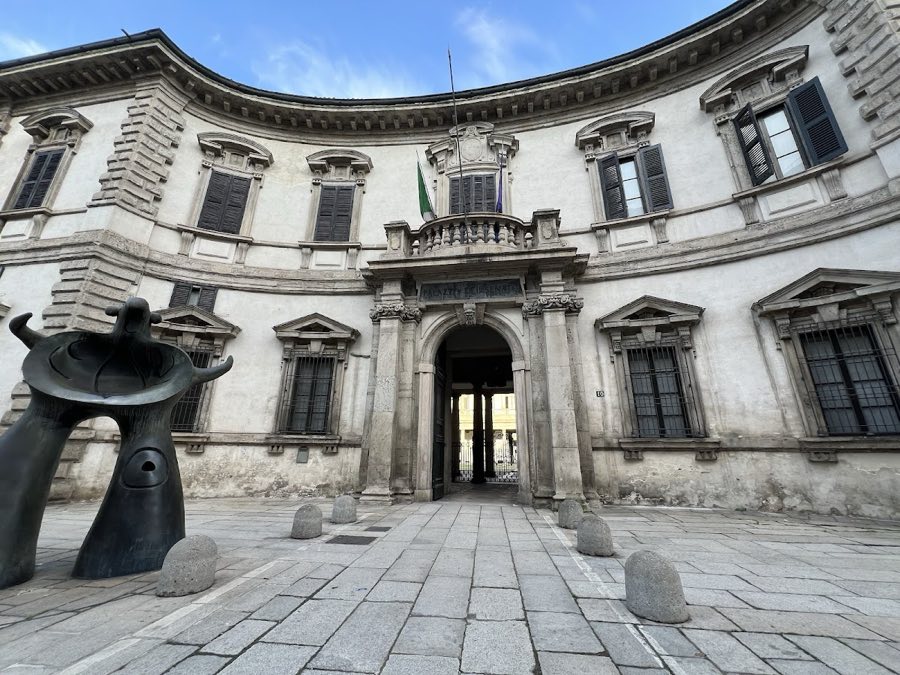
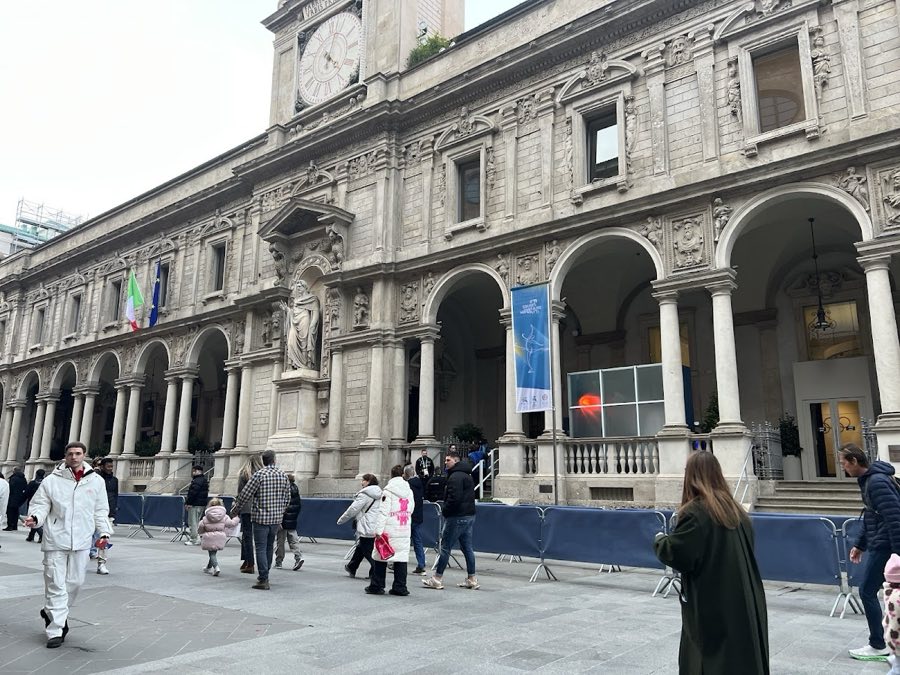
Palazzo del Senato, Milan
Milan, Italy
PalaceRestoredFor events18th century
No. 18123
No. 18123 · 45.468 N, 9.204 E
Quick summary
Palazzo Isimbardi is a palace in Italy with origins associated with the 15th century.
See all castles in ItalyPalazzo Isimbardi in Milan, Italy, is a historic city palace whose earliest fabric dates to the 15th century and which shows phases from the Renaissance through later Baroque and Neoclassical remaking. Built in the context of Renaissance Milan, the building later acquired important civic functions and has housed provincial and metropolitan government offices, which has been a principal reason for its continued prominence.
Local tradition places the palace’s original nucleus in the 1400s as the home of Cicco Simonetta, a councillor to Francesco Sforza. The first surviving documentary reference appears at the end of that century, when the property passed to a descendant of Gerolamo Pallavicino. Members of the Pallavicino family retained ownership into the mid-1500s. In that period the residence left the Pallavicino line and was sold to the Taverna family, who treated the palace as a country house near the city and carried out substantial remodelling as their fortunes grew.
A violent episode in the palace’s history occurred in 1607. The hunted noble Gian Paolo Osio sought refuge there, hoping the Taverna household would shelter him. Instead he was murdered in the palace basement by members of the family. After the Taverna male line ended, the property passed through several hands before the Lambertenghi family acquired it in 1731. The Lambertenghi carried out a major programme of alteration during roughly fifty years of ownership, after which the palace was sold to the Isimbardi family.
The Isimbardi family undertook further restoration work, notably transforming the façade that faces the garden. When Luigi Isimbardi died without heirs in 1908, the house was purchased by the industrialist Franco Tosi. In 1935 the Province of Milan acquired the building and installed its administrative offices there. Following the later abolition of the provincial body, the palace became the seat of the Metropolitan City of Milan. A 1939 campaign of restoration and alteration included an enlargement toward Via Vivaio, and during that work sections of the Renaissance frescoes on the portico vaults were uncovered. Local legend continues to link the building with the murdered Gian Paolo Osio, whose ghost is said to roam the cellar.
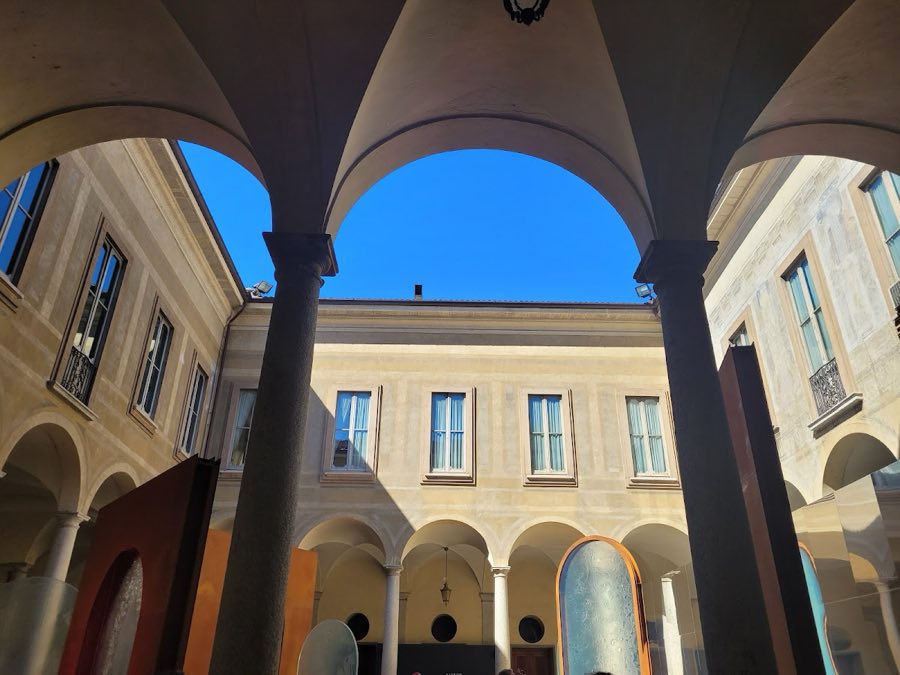
The palace presents a compact plan centered on a square inner courtyard surrounded by a four-sided portico. The courtyard is supported on granite columns, set in the classical Doric order, a column style with plain capitals, and these columns carry semicircular arches that define the gallery around the open space. The vaulted ceilings above the portico were decorated in a Renaissance pictorial programme; fragments of that painted scheme emerged again during the 1939 restoration campaign and survive in places on the vault surfaces.
The street-facing front was reshaped in the 1700s and displays the regional Baroque manner of Lombardy. The raised façade reads as two main storeys articulated by horizontal mouldings and stucco cornices, with a dressed-stone entrance topped by a balconied opening whose balusters are richly carved. On the garden side the building presents a later Neoclassical face, with a ground level treated in rusticated stonework, that is, blocks with a deliberately rough or protruding finish, and a central section crowned by a large triangular pediment, the classical gable above the main projection.
Interior decorative schemes survive in several named rooms. The room known as the Sala degli affreschi contains works by Morazzone. The Council Chamber features a fresco titled the Apotheosis of Angelo della Vecchia in the sign of the virtues, executed by Giambattista Tiepolo. Another principal room preserves Francesco Hayez’s painting Episode of the Visconti. The palace also displays several 20th-century sculptures by Ivo Soli (1898–1976). Modifications made around 1939 included an extension on the Via Vivaio side, and the partial uncovering of Renaissance vault paintings during that campaign is visible today. Oral tradition continues to associate the cellar with the fate of Gian Paolo Osio.
No. 18435
No. 86912
No. 49673
No. 79019
Comments
Comments for Palazzo Isimbardi will require a verified account before posting.
We'll send a verification link before your first comment is published.