No. 48392
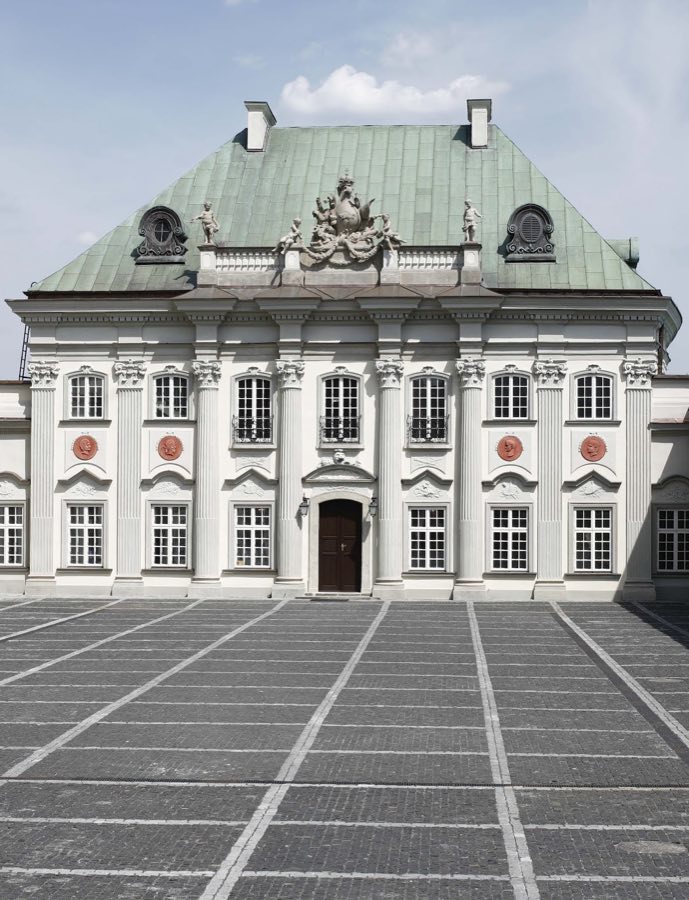
Copper-Roof Palace, Warsaw
Warsaw, Poland
PalaceRestoredFor events17th century
No. 86817
Palace · Poland
No. 86817 · 52.248 N, 21.014 E
For events
Royal Castle in Warsaw is marked as a château or castle venue lead. Capacity, indoor/outdoor spaces, catering rules, and accommodation options are published only after public verification.
Event types: Private events, Cultural gatherings, Filming and photography
Quick summary
Royal Castle in Warsaw is a palace in Poland with origins associated with the 14th century.
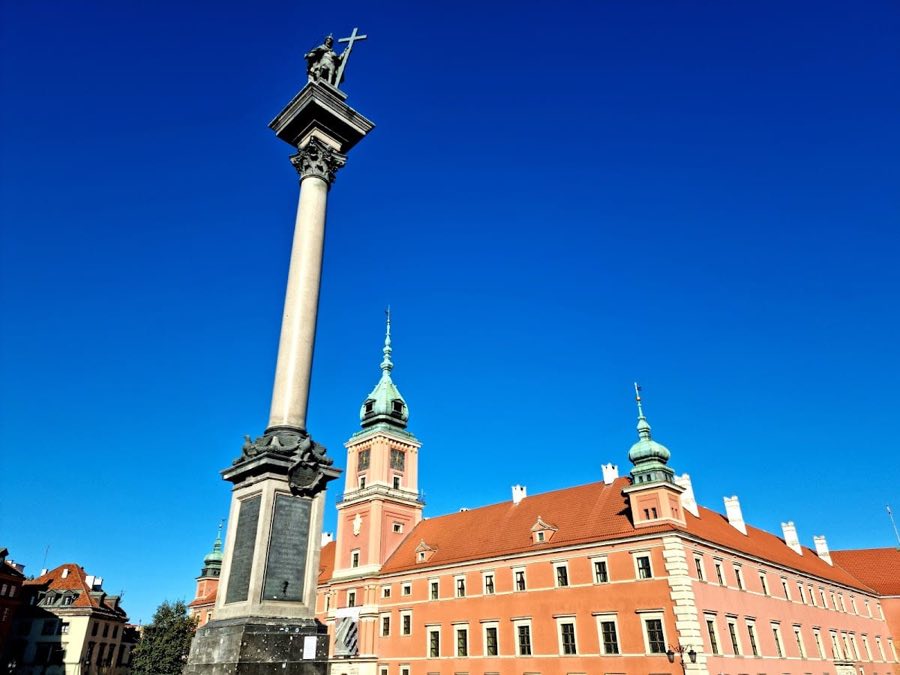
See all castles in PolandThe Royal Castle in Warsaw, located in the city of Warsaw in present-day Poland, was originally built by the Masovian dukes in the 14th century. It was established on the site of an earlier wooden and earth fortification, or gord, constructed under Duke Bolesław II, who ruled from 1294 to 1313. The castle initially served as a defensive stronghold before evolving into a princely residence during the reign of Duke Janusz I the Elder. Between 1407 and 1410, Janusz I replaced the earlier structures with the Curia Maior, a substantial Gothic brick manor that marked a shift from military fortress to a noble dwelling.
Following the incorporation of the Masovian lands into the Kingdom of Poland in 1526, the castle gained new prominence as a royal residence. Queen Bona Sforza and her daughters made it their home beginning in 1548, and King Sigismund II Augustus held parliamentary sessions there in 1556–57 and 1564. After the 1569 Lublin Union united Poland and Lithuania, the castle became the fixed seat of the parliament of the Polish–Lithuanian Commonwealth, marking its rise as a center of political activity.
Under King Sigismund III Vasa in the late 16th and early 17th centuries, the castle underwent significant enlargement and stylistic transformation. Architects such as Giovanni Trevano and Matteo Castelli contributed to its redesign in a mannerist and early Baroque fashion, culminating in a sprawling complex of five wings. The centerpiece from this era was the construction of the 60-meter-high Sigismund’s Tower, completed in 1619, which became a distinct feature of the Warsaw skyline. The castle also hosted important events including the homage paid by Tsar Vasili IV of Russia in 1611.
The castle faced considerable hardship during the mid-17th century Swedish Deluge (1655–1657). Used as a military hospital, it suffered extensive theft and damage to its furnishings and artworks. Despite these setbacks, it was restored and further enhanced during the 18th century under the rule of Augustus II and Augustus III. Baroque and Rococo renovations included the addition of the Saxon Elevation façade along the Vistula River, decorated by prominent sculptors like Jan Jerzy Plersch.
The reign of the last king of Poland, Stanisław II Augustus (1764–1795), marked the castle’s most artistically significant period. Neoclassical interior designs were commissioned from architects such as Jakub Fontana and Domenico Merlini, transforming representative rooms into refined spaces including a marble chamber, throne room, and ballroom. This era also saw the creation of a royal library building (1780–1784) which housed extensive collections of books, drawings, and coins, and enriched the castle’s cultural holdings.
During the 19th century, after the partitions of Poland, the castle was repurposed as the residence of Russian governors. Ivan Paskievich notably directed neoclassical renovations of the façade undertaken by Ludwik Corio. Under the Russian administration, the castle was militarized and suffered degradation, with many royal interiors either destroyed or converted for use as barracks.
In the 20th century, the castle served as the official residence of the Polish head of state during the interwar period. It endured severe damage during the German bombing of Warsaw in 1939 and was systematically destroyed by Nazi forces following the 1944 Warsaw Uprising. The occupying troops also removed or looted much of its artistic treasure and architectural elements.
Starting in 1971, a major reconstruction effort, largely funded by voluntary contributions, restored the castle largely to its 17th-century appearance. Led by architect Jan Bogusławski and conservator Stanisław Lorentz, the restored Royal Castle reopened as a museum in 1979. The site, along with Warsaw’s Old Town, was designated a UNESCO World Heritage Site in 1980. Today, the Royal Castle functions both as a museum housing important artworks, royal insignia, and historical artifacts, and as a venue for official state ceremonies.
The Royal Castle complex presents a distinctive five-winged arrangement reflecting mannerist and early Baroque architectural styles. The main façade, stretching approximately 90 meters along Castle Square, is flanked by two square towers topped with bulbous spires. Dominating the silhouette is the 60-meter-high Sigismund’s Tower, built in 1619. This tower culminates with a 13-meter spire and features gilded clock hands on its copper-faced clock, elements that have become iconic symbols of Warsaw.
One of the oldest parts of the castle, the Curia Maior or Big Manor, dates back to the early 15th century when Duke Janusz I the Elder erected this sizable Gothic brick structure measuring about 47.5 by 14.5 meters. Originally a three-story building with richly decorated façades featuring niches and gables, its exterior was destroyed in 1944 but carefully reconstructed during the post-World War II renovation. The Curia Maior was later adapted during the Renaissance to accommodate parliamentary chambers, with the Chamber of Deputies on the ground floor and the Senate Chamber above. The façade was adorned with coats-of-arms corresponding to its political function.
Historically, the castle housed a large double-storied opera hall exceeding 50 meters in length, built in the 17th century. This grand hall was lost during the Swedish Deluge and was not rebuilt in later restorations. In the 18th century, Baroque enhancements were added, including the completion of the Saxon Elevation façade on the side facing the Vistula River. This frontage was characterized by rococo details, three projecting sections known as risalti or avant-corps, and decorative sculptures such as the “Famous Figures” created by Jan Jerzy Plersch, holding royal crowns that symbolized monarchical authority.
The southern wing suffered a fire in 1767 and was subsequently rebuilt with two restored floors featuring a three-axis risalit and Ionic pilasters. Within, representative rooms underwent redesign in the neoclassical style, including the Marble Room, Throne Room, Ballroom, Knights Hall, and Conference Chamber. These interiors were carefully crafted to embody elegance and serve official functions during the reign of King Stanisław II Augustus.
Adjacent to the main castle lies the Royal Library building, constructed between 1780 and 1784 by architect Domenico Merlini. Executed in a restrained neoclassical manner, the library was designed to house a collection exceeding 16,000 volumes, alongside extensive assortments of drawings, coins, and medals, underscoring the castle’s role as a center of learning and culture.
Despite the widespread destruction of World War II, several original elements survived and were integrated into the castle’s postwar reconstruction. These include the cellars, the lower portions of the Great Tower, the Royal Library building, and the Kubicki Arcades, a series of connecting passageways leading to the Royal Gardens. Together with the Copper-Roof Palace situated to the east, these components maintain the historical spatial relationships of the complex.
The castle interiors were restored with great attention to detail, employing original furnishings where available or meticulous replicas. Decorative features such as stucco work, wood paneling, and paintings—among them Canaletto views by Bernardo Bellotto—were recreated to evoke the grandeur of the castle’s peak periods. The clock mechanism on Sigismund’s Tower was rebuilt in the 1970s, consisting of 1,700 parts including four clock faces and bells, replicating the original prewar design and craftsmanship.
Within its halls, the castle also preserves significant historical artifacts. Among these are royal insignia like the ceremonial Order of the White Eagle chain, a sword, and an aquamarine scepter. The collection includes an urn containing the heart of Polish national hero Tadeusz Kościuszko and notable artworks by painters such as Rembrandt and Marcello Bacciarelli, reflecting the castle’s enduring heritage as a repository of Poland’s artistic and cultural legacy.
No. 48392
No. 73300
No. 11271
No. 59115
Comments
Comments for Royal Castle in Warsaw will require a verified account before posting.
We'll send a verification link before your first comment is published.