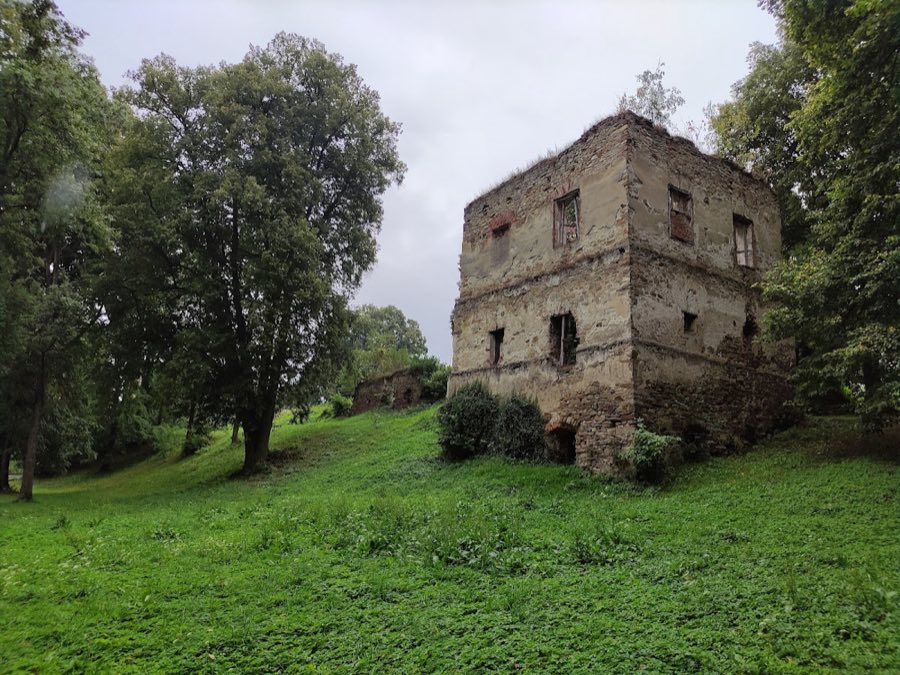
No. 47234
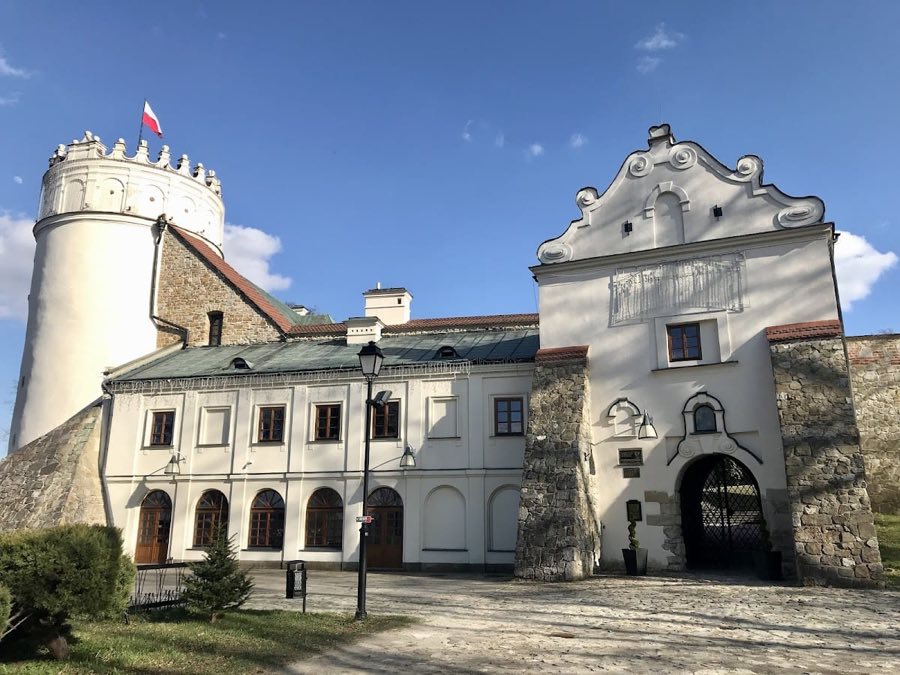
Dąbrówka Starzeńska Castle
Poland
CastleRuinFor events15th century
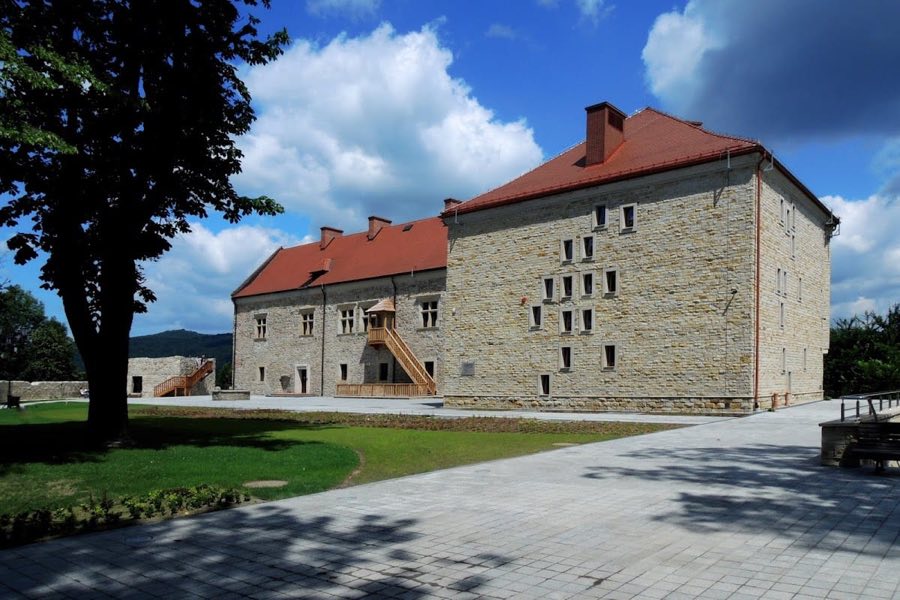
No. 57866
Castle · Poland
No. 57866 · 49.562 N, 22.209 E
For events
Sanok Castle is marked as a château or castle venue lead. Capacity, indoor/outdoor spaces, catering rules, and accommodation options are published only after public verification.
Event types: Weddings, Private events, Cultural gatherings, Filming and photography
Ceremony spaces: Ceremony setting to verify
Quick summary
Sanok Castle is a castle in Poland with origins associated with the 14th century.
See all castles in PolandSanok Castle is situated in the town of Sanok in modern Poland, a site originally developed by medieval Ruthenians and later embraced by the Polish Crown. Its earliest recorded mention appears in the Ruthenian Hypatian Codex of 1150, which describes King Géza II of Hungary’s military campaign that captured Sanok along with nearby Przemyśl. At this time, the castle was likely a wooden fortification crowning a hilltop, serving defensive and strategic roles. This early structure was destroyed during the devastating Tatar invasion of 1241, which swept through the region.
In the 14th century, following Poland’s recovery of the territory known as Red Ruthenia under the Piast dynasty, King Casimir III the Great initiated considerable rebuilding efforts. He ordered construction of a royal stone palace fortified by defensive walls atop a hill 317 meters above sea level, overseeing the San River valley. This marked the transformation from a wooden stronghold to a more permanent stone complex designed for both residence and defense.
Sanok itself gained urban privileges with Magdeburg city rights granted in 1339 by Duke Bolesław Jerzy Trojdenowicz. During the following decades, the castle functioned as a royal residence and the seat of local administration. Notably, King Władysław Jagiełło held his wedding feast at Sanok Castle in 1417, highlighting the site’s significance. The castle also served as the last residence of Queen Sophia, who died there in 1461. From the early 15th century through the mid-16th century, the castle hosted the Grodzkie Office, managing starosts (local royal officials) and courts, including a high court applying German Magdeburg law established in 1425. Additionally, from the reign of Jagiełło onward, the castle was used as a residence for royal widows, underlining its administrative and ceremonial importance.
Between 1523 and 1548, Queen Bona Sforza commissioned a Renaissance-style redesign that replaced much of the earlier Gothic structure. This renovation led to the demolition of a 15th-century Orthodox Church of St. Demetrius, whose cemetery was later revealed through archaeological work. In the mid-16th century, following her escape from Hungary, Queen Isabella Jagiellon also took up residence at the castle during 1555–1556. The late 16th century saw the addition of a southern wing, followed by a northern wing in the early 18th century, reflecting ongoing adaptations and expansions to the complex.
Military history also marked the castle’s story. In 1809, during the Napoleonic Wars, the fortress successfully repelled Austrian forces, with the defense led by Franciszek Ksawery Krasicki. Later, in 1915, Russian troops demolished the southern wing amid their invasion, damaging the structure. Between the World Wars, the castle became home to the Museum of the Sanok Land and various local government offices.
World War II brought turmoil when the castle was looted in 1939 and then repurposed by German occupiers as the Lemko Museum. Situated near the Molotov Line—a defensive border—German bunkers were constructed on the hill during this period. After the war, the building served military functions including as a hospital and armory, until comprehensive restoration began in 1965. The castle was officially registered as a historic monument first in the 1950s, and later reaffirmed in the 2010s.
From 2000 to 2004, interior renovations adapted the space to museum use, culminating in the opening of the Zdzisław Beksiński Gallery in 2012, which holds the world’s largest collection of this artist’s works. Archaeological research, conducted intermittently from 1942 to 2012, uncovered early medieval fortifications and cemeteries near the former church site. Since 2010, reconstruction efforts have included rebuilding the southern wing, supported by European Union regional funds, demonstrating a continued commitment to preserving Sanok Castle as a cultural and historical landmark.
Sanok Castle occupies a steep hill rising 317 meters above sea level, positioned to oversee the eastern slope descending to the San River, now known as the Płowiecki Stream. The complex reveals successive phases of construction, beginning as a wooden fortification before being transformed into a stone castle in the 14th century under King Casimir III. The original medieval stone fortress featured a two-story main building with vaulted cellars beneath, which served judicial purposes. Above, administrative officials conducted their duties, while a separate tower functioned as a prison, illustrating the organization of space for governance and security.
The Renaissance reconstruction ordered by Queen Bona Sforza between 1523 and 1548 introduced stylistic and structural changes that replaced the earlier Gothic elements. This period marked the removal of the 15th-century Orthodox Church of St. Demetrius and its associated cemetery, whose archaeological remains came to light in 2005. The castle expanded at the end of the 16th century with the addition of a southern wing and again in the early 18th century with a northern wing. The southern wing suffered demolition in 1915 during Russian incursions but partial restoration efforts began in 2010.
Archaeological features include remnants of the defensive earthworks and walls, particularly on the western side where moats are evident. Within the castle grounds lies a historic well, while beneath the courtyard, a network of German bunkers from World War II remains integrated into the terrain. These wartime fortifications highlight the site’s continued strategic importance into the 20th century.
Building materials vary, with earlier medieval phases constructed from stone of local origin, while later restorations employed lower quality stone and some masonry techniques have been noted as ahistorical, affecting the visual coherence of the fortification. Notably, the planned reconstruction of the castle’s viewing tower was never completed, altering the silhouette visible today.
Interior renovations in the early 21st century revealed foundational remains of the so-called Kazimierz Tower, allowing for better understanding of the original layout. Within the castle complex stands a smaller, more recent structure built in the late 20th century adjacent to the historic portions.
Today, the castle houses extensive cultural collections, including nearly 200 Lemko religious icons reflecting the region’s spiritual heritage. The southern wing reconstruction has enabled exhibition space for the Zdzisław Beksiński Gallery, dedicated to the surrealist artist whose works form the largest compilation worldwide within this museum setting. These collections are housed within spaces that preserve traces of the castle’s long and varied history, making Sanok Castle a key site for both archaeological and artistic appreciation.
No. 47234
No. 15061
No. 29028
No. 80989
Comments
Comments for Sanok Castle will require a verified account before posting.
We'll send a verification link before your first comment is published.