No. 36406
Herbst Palace (Muzeum Pałac Herbsta)
Poland
PalaceRestoredFor events19th century
No. 14091
Palace · Poland
No. 14091 · 51.759 N, 19.475 E
Quick summary
Scheibler Palace, Łódź is a palace in Łódź, Poland with origins associated with the 19th century.
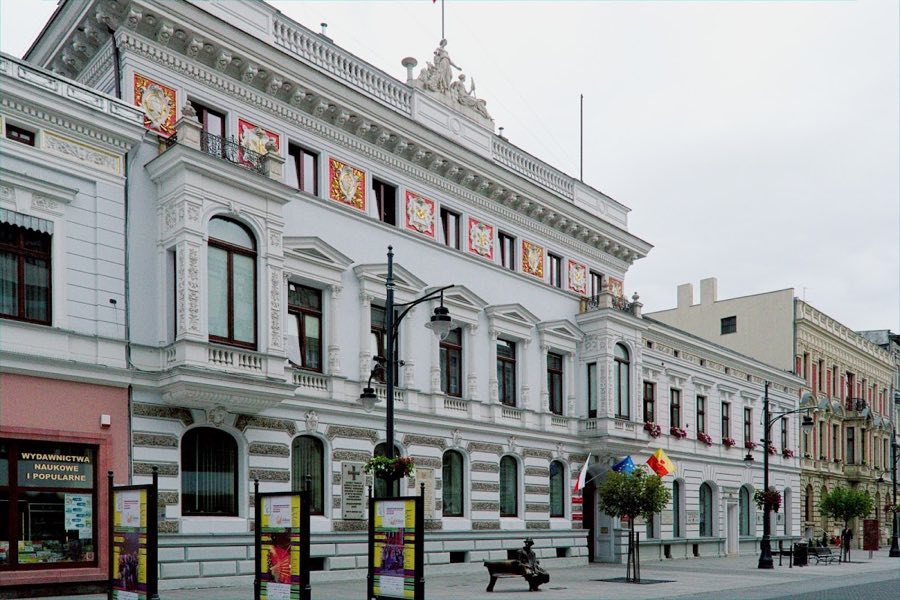
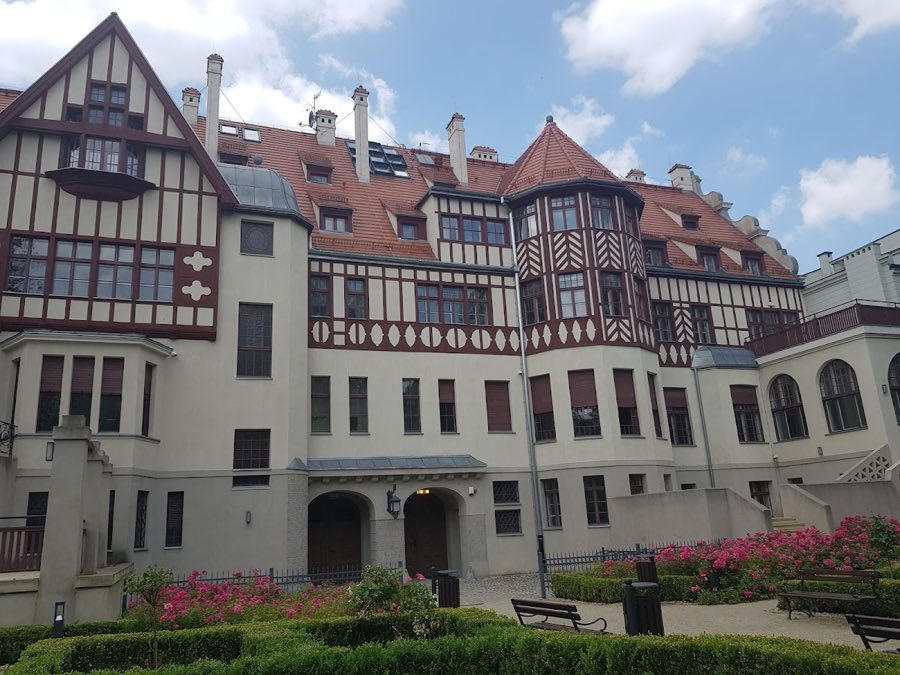
See all castles in PolandKarl Wilhelm Scheibler’s palace in Łódź, Poland, was built in 1856 for the Polish industrialist Karol Wilhelm Scheibler. Erected in the mid‑19th century, the house acquired the appearance associated with the neo‑Renaissance during a major rebuilding in the 1880s, and it stood as the private residence of one of the city’s leading factory owners beside his industrial complex and the nearby workers’ estate. The building’s location and use linked it closely to Łódź’s rapid industrial expansion and the social world of its factory proprietors.
The structure was altered soon after its first construction, undergoing a rebuilding in 1865 and then a much larger transformation between 1884 and 1887 that gave the façade and overall massing the form seen today. Furnishings and technical equipment for the house were brought in from major Central European centres, reflecting the household’s ties to Berlin, Dresden, and Paris. The interior scheme that resulted combined a range of historicizing styles appropriate to a wealthy 19th‑century household.
The Scheibler family continued to live in the palace until 1932, when the Bank Gospodarstwa Krajowego took control of the property as part of measures connected with the company’s financial rehabilitation. From January 1933 until September 1939 General Feliks Maciszewski lived in the building while serving as president and managing director of the United Industrial Works of Karol Scheibler and Ludwik Grohman in Łódź on behalf of the bank.
During the Second World War the palace saw varied occupants. Jerzy Scheibler lived there for a time, while some rooms on the first floor were used by the city police force, the Schutzpolizei, between 1939 and 1941. The principal occupant in that period was the Wehrmacht, the German armed forces.
After the fighting ended the building was quickly put to an academic use. From about 24 May 1945 it became the seat of the rectorate of the Łódź University of Technology and remained in that role until 1950. In the decades that followed a succession of institutions used the premises. Between 1957 and 1990 the State Primary Music School occupied the palace, in later years limited to rooms within the former stables. From 1986 the house became the home of Poland’s Museum of Cinematography, which installed a rare 19th‑century optical machine in a former bathroom on the upper floor. The old carriage house was fully rebuilt and reopened on 6 October 2006 as a small museum cinema named Kinematograf. In 2015 the palace was given formal national heritage protection as a monument of history. The palace interiors have frequently been used as film sets, most notably in a widely shown black‑and‑white feature released in 1967, and they appear in many Polish and international film productions.
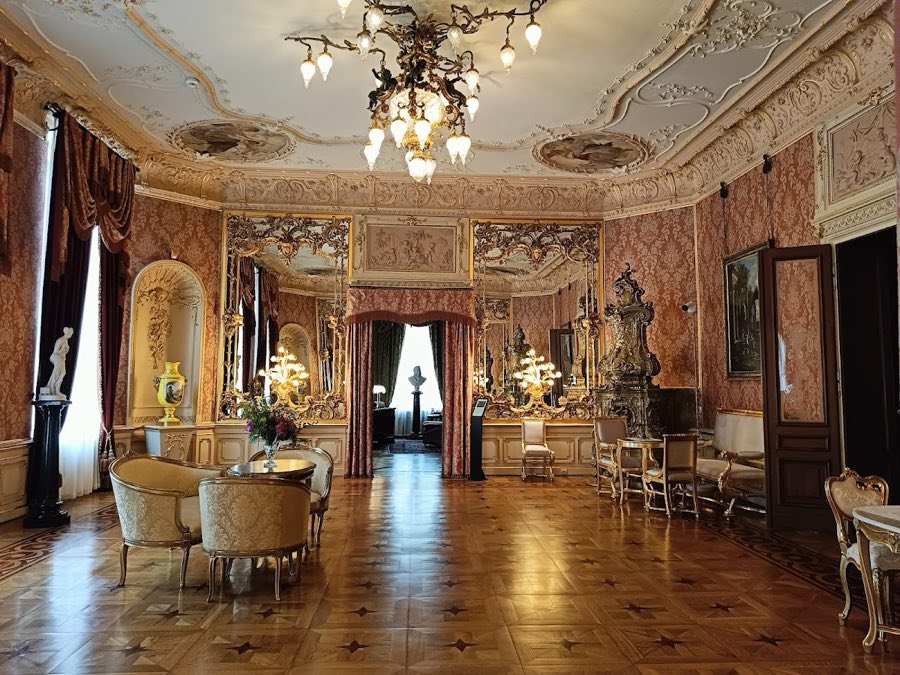
The palace presents a late‑19th‑century neo‑Renaissance exterior that dates to the 1884–1887 rebuilding, set beside the Scheibler factory complex and the Księży Młyn workers’ neighbourhood. Internally the house displays an eclectic mix of decorative programs. The principal ground‑floor rooms form a line of interconnected spaces, an enfilade (a suite of rooms aligned so one can look through several at once), which originally contained a study, a mirror room, a dining room in a late mannerist mode, a Moorish‑style room, and a bedroom decorated in a neo‑Rococo taste.
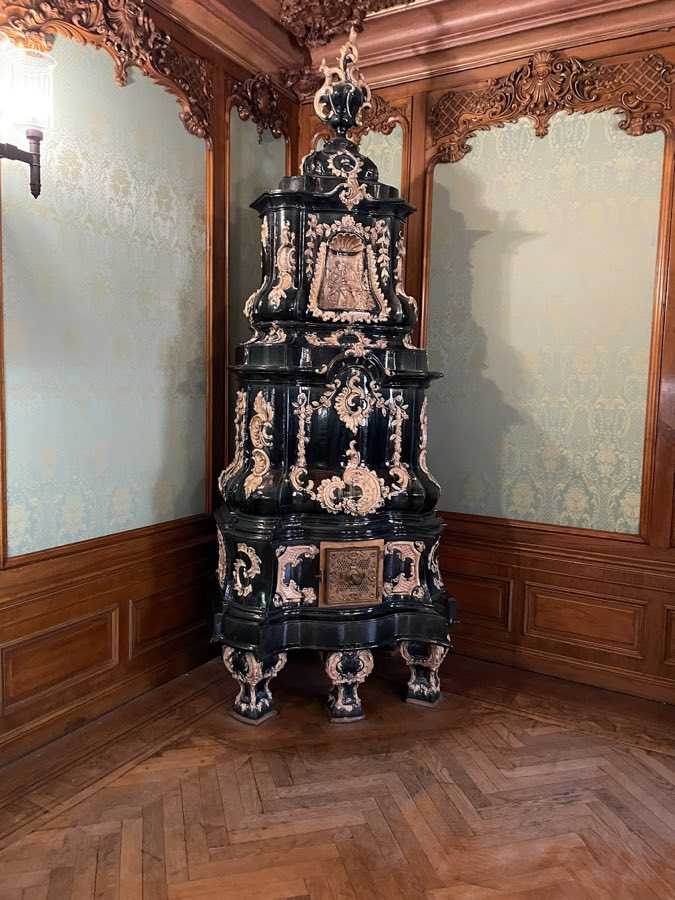
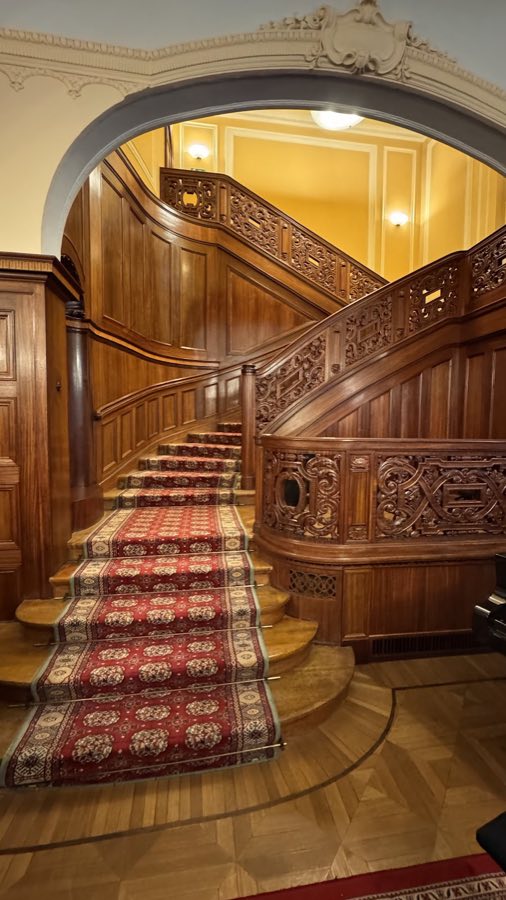
Surviving interior fittings preserve examples of fine 19th‑century craft. There is extensive wood panelling, known as boiserie (wood panelling), surfaces treated to resemble Cordovan leather, patterned wallpapers and painted wall decoration, and a number of high‑quality stoves and sideboards. In the former owner’s study a Venetian mosaic produced by the stuccator Antonio Salviati and dated 1886 remains in place; this piece is recorded as the only work by that maker in Łódź. The original furnishings of the principal private apartments on the first floor did not remain, but stuccoed ceilings survive along with the bathroom floor and fragments of the original window joinery.
A rare optical device, a 19th‑century photoplastikon made by August Fuhrmann, has been installed in the former bathroom on the first floor; it is one of only four such machines preserved anywhere. The former carriage house was comprehensively rebuilt and adapted to serve as a museum cinema, opening in 2006 as Kinematograf. Over time the palace has undergone repair and reuse to accommodate institutional occupants, and many interior rooms retain a condition suitable for display and for use in film production.
No. 36406
No. 17147
No. 32428
No. 25432
Comments
Comments for Scheibler Palace, Łódź will require a verified account before posting.
We'll send a verification link before your first comment is published.