No. 14091
Scheibler Palace, Łódź
Łódź, Poland
PalaceRestored19th century
No. 32428
Palace · Poland
No. 32428 · 51.748 N, 19.461 E
Quick summary
Steinert Palace, Łódź is a palace in Łódź, Poland with origins associated with the 19th century.
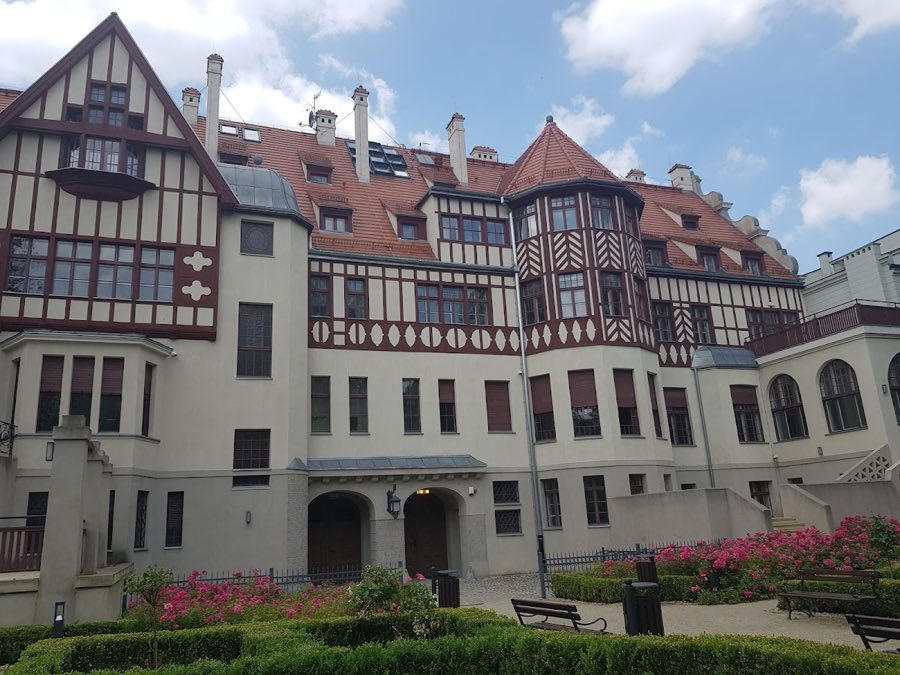
See all castles in PolandSteinerts’ palace in Łódź, Poland is a twin-family urban residence built by the Steinert industrial household in 1909 in a South German pseudo-baroque style. The palace was intended both as living quarters for members of the same family and as a visual statement of the owners’ identity, and it sat amid the workshops and production buildings that linked the household to the local cotton industry. Its form and ornament were chosen to make a deliberate cultural claim while also marking the family’s place within Łódź’s textile economy.
The Steinert family’s presence on the site began earlier in the nineteenth century. A modest house erected in 1833 stands immediately beside the later palace and is identified as the location where the family launched their industrial activity. Behind the main frontage, a range of former production buildings served the manufacture of cotton fabrics and formed the working rear of the property.
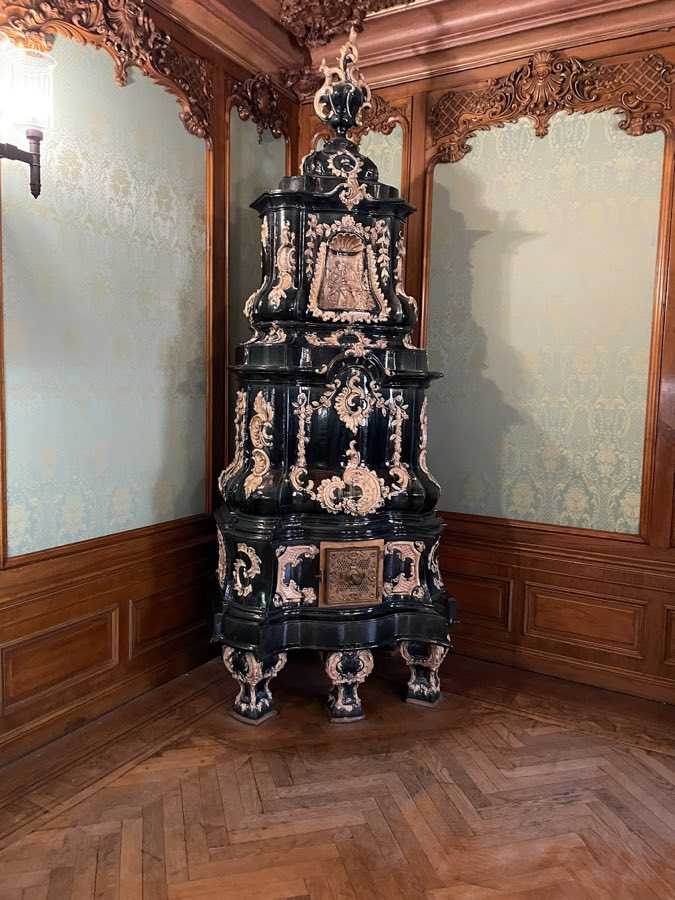
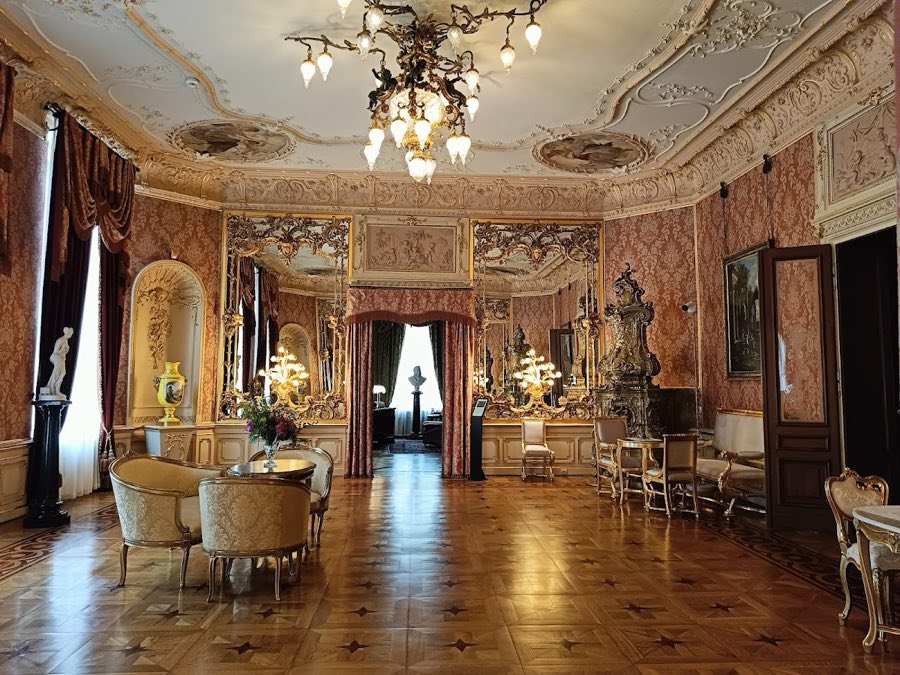
In 1909 the family commissioned a new residence arranged as two separate living units under a single facing, a plan that made it possible for two branches to occupy adjacent but legally independent houses. The façade and gateways were completed with a dated decorative panel placed centrally, and the overall composition emphasized the owners’ cultural roots through its choice of stylistic vocabulary. Inside, the apartments were fitted with high-quality finishes and furnishings that reflected the household’s wealth, including coloured glass, woven wall hangings, wood panelling, and tiled fireplaces. A dividing wall in the inner court separated the two households’ garden plots.
In the early twenty-first century the palace was the subject of an extensive restoration carried out between 2017 and 2019 that renewed the building’s appearance and fabric while keeping its historical layout as a pair of adjacent dwellings.
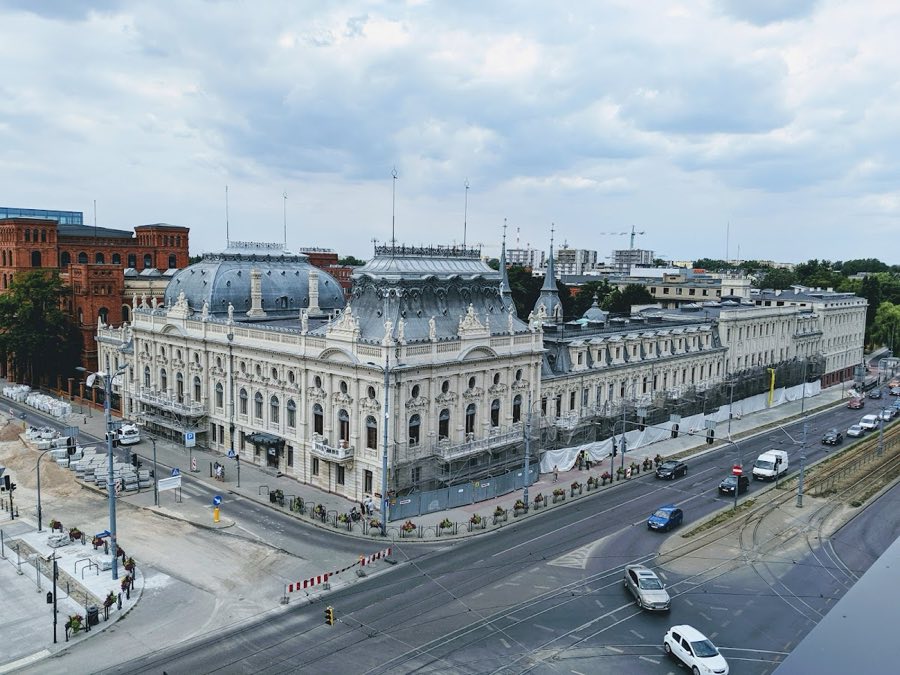
The property presents as two independent townhouses standing behind a single unified street-facing elevation. Each dwelling has its own entrance gate set within the shared frontage, and the inner yard shows evidence of the original division between the households, where a low wall once cut the garden into two distinct plots. The street face emphasises asymmetry, with an irregular pattern of apertures and projecting two-storey bay windows that break the composition across the two units.
Each entrance sits beneath a rounded arch and is surmounted by a three-part window. Between the two principal gates a carved panel records the building year and bears the motto translated as “Health to those entering” (Latin: salus intrandibus). The roof is arranged as a two-storey block capped with a mansard form and finished by gable ends framed with curved volute ornaments.
Surface decoration across the façade remains rich and varied, including ornamental panels, sculpted faces of putti, rosette motifs, stylised lion figures, mascarons and leaf festoons inspired by acanthus. Above the vehicular or carriage openings are sculptural emblems that refer to the household trade, showing a small figure at a spinning device set within a toothed-gear motif that connects the residence visually to textile manufacture.
Interior fittings were once sumptuous. Historical fittings included coloured leaded glass, woven tapestries, rooms lined in fine wood panelling, and stoves faced with decorative majolica tiles. The modest house from 1833 still stands adjacent to the palace and provides a visual counterpoint in scale and character to the later construction. At the rear of the site the former post-factory buildings that supported cotton cloth production survive, forming a compact complex that records the property’s combined domestic and industrial functions. The main palace fabric was comprehensively renovated in 2017–2019, returning many external and internal elements to stable condition.
No. 14091
No. 36406
No. 17147
No. 36839
Comments
Comments for Steinert Palace, Łódź will require a verified account before posting.
We'll send a verification link before your first comment is published.