No. 46674
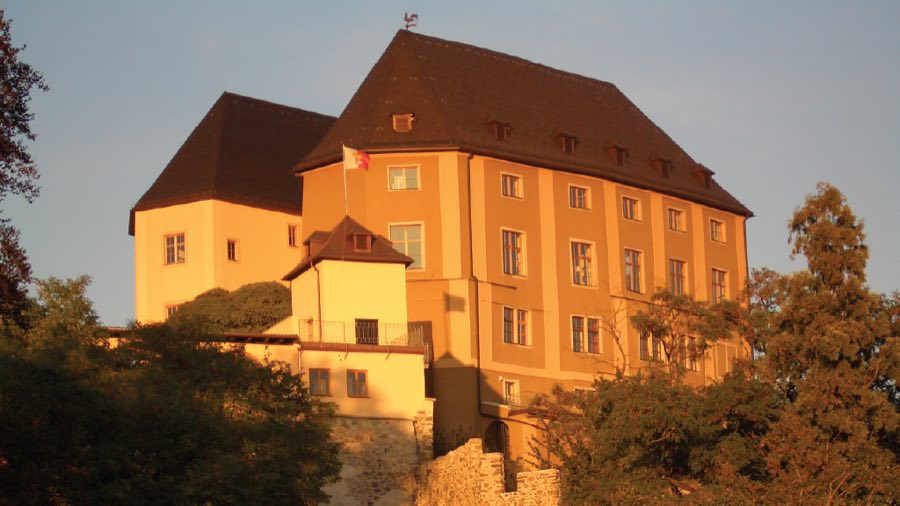
Schloss Steyregg
Austria
CastleRuin12th century
No. 49887
Castle · Austria
No. 49887 · 48.368 N, 14.404 E
For events
Schloss Riedegg is marked as a château or castle venue lead. Capacity, indoor/outdoor spaces, catering rules, and accommodation options are published only after public verification.
Event types: Private events, Cultural gatherings, Filming and photography
Quick summary
Schloss Riedegg is a castle in Austria with origins associated with the 20th century.
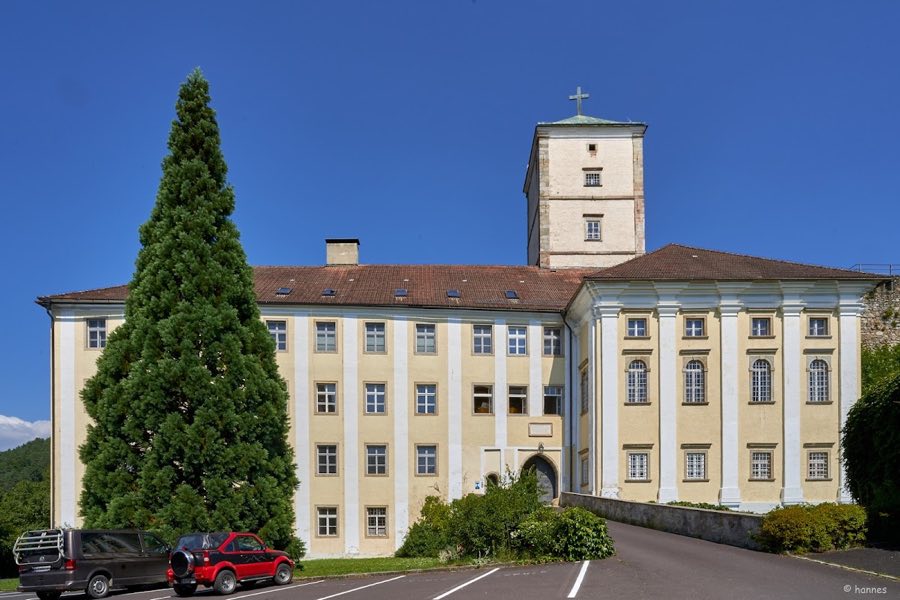
See all castles in AustriaSchloss Riedegg in Alberndorf in der Riedmark, Austria began as a medieval stronghold first recorded about 1150, and its fabric and documentary traces show continuous adaptation from the Middle Ages into the early modern period. The present appearance of the palace owes much to work carried out in the 1500s and the major rebuilding completed in 1609, and the site served as a regional lordly residence and estate seat for members of the Starhemberg family. Inscriptions and later records link the castle to imperial administration and to investments in water supply and cultivated gardens, underlining its role as both a defensive place and a managed noble household.
The earliest phase survives in parts of the complex and in the chapel, whose vaulted ceilings date to the later 1300s and point to a substantial medieval presence. In 1529 the property, then held by Erasmus von Starhemberg, was transformed into a castle with labor supplied by Turkish prisoners, reflecting events of that decade. Ownership remained with the Starhembergs into the following century; in 1593 the estate passed to Reichard, called Richard, von Starhemberg.
A destructive fire led to a comprehensive reconstruction completed in 1609 under Richard, Baron von Starhemberg. An inscription placed above the gateway records that rebuilding campaign, lists his territorial titles including Wildberg and Lobenstein and his role as councillor to Emperor Rudolf II, and records practical improvements: water was brought by lead piping from the neighboring hill and new vineyard terraces and gardens were laid out. By the mid-1700s the castle formed the administrative center of a small lordship that, together with Breitenbruck, had some 385 subjects attached to it.
In the 20th century the property left the Starhemberg family. In 1933 Prince Ernst Rüdiger Starhemberg sold the castle to an English owner, Slater, who resold it in 1936 to the Missionaries of Mariannhill. The missionaries established a monastery here and later developed a school complex that included a secondary school. After renovations in the 1970s a small Africa museum was set up inside the building, housing ethnographic material brought together by the religious community. The Polytechnic School Gallneukirchen was based in the castle until 2016; that school moved out by the end of the 2018/2019 school year and was finally closed in 2022.
In 2015 an investor group purchased the property. The Missionaries of Mariannhill retained ownership of the chapel, the Africa museum and the cemetery while moving into new apartments on site with lifelong residence rights. At the same time residential leases ended and parts of the complex were adapted for a therapy and doctors’ centre operating outside public health insurance contracts. The castle is protected under listing as a historic monument.
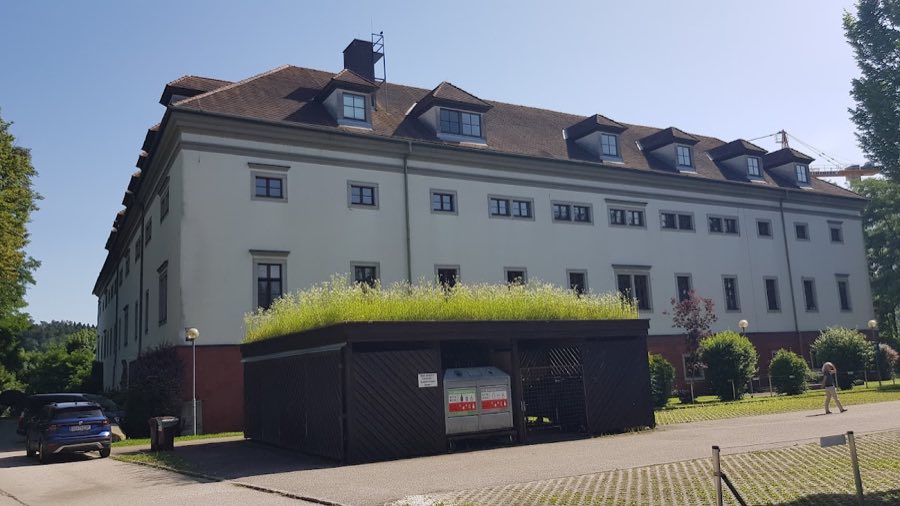
Perched on a prominent hill and embraced on three sides by the Große Gusen river, the complex presents as a two-wing building arranged around an inner courtyard. The plan concentrates living and service spaces along two ranges that form an enclosed yard, and the site’s hilltop position and surrounding water shaped its defensive and domestic layout from the medieval period onward.
The former approach to the entrance relied on a raised access crossing, originally a drawbridge, which has been replaced by the stone bridge in use today. Above the main gateway a carved inscription records the early modern rebuilding and infrastructure works. A broad, horse-friendly stair known as an equestrian staircase remains within the circulation of the buildings; this stair was built to allow riders or led horses to reach upper levels and is integrated into the castle’s service arrangements.
The small chapel survives with two distinct rooms whose ribbed cross-vaults, a form of vaulted ceiling with intersecting ribs, were produced in the second half of the 14th century. These vaulted ceilings are fairly well preserved and attest to the medieval phase of construction that predates the large-scale early 17th century rebuilding. Adjacent grounds include a garden held up by a massive retaining wall built of large rubble-stone blocks, demonstrating the use of locally quarried masonry in terracing and landscape support.
An inscription from the 1609 reconstruction records the laying of water supply in lead piping from the neighboring hill, indicating a deliberate investment in household infrastructure during that campaign. Internal spaces were reused for new functions in the 20th century and after the 1970s renovation a small Africa museum was installed. The museum’s collection comprises stuffed animals from Transvaal and Orange, household objects associated with the Zulu, weapons such as spears, arrows and axes, a range of jewelry including bracelets, rings, earrings and chains, and religious utensils. The chapel, museum rooms and the cemetery remained under the ownership of the Missionaries of Mariannhill when the property changed hands in 2015. The building is registered as a protected historic monument.
No. 46674
No. 15621
No. 34296
No. 90387
Comments
Comments for Schloss Riedegg will require a verified account before posting.
We'll send a verification link before your first comment is published.