No. 94652
Burg Haunsperg
Austria
CastleRuin12th century
No. 41830
Castle · Austria
No. 41830 · 48.007 N, 12.866 E
Quick summary
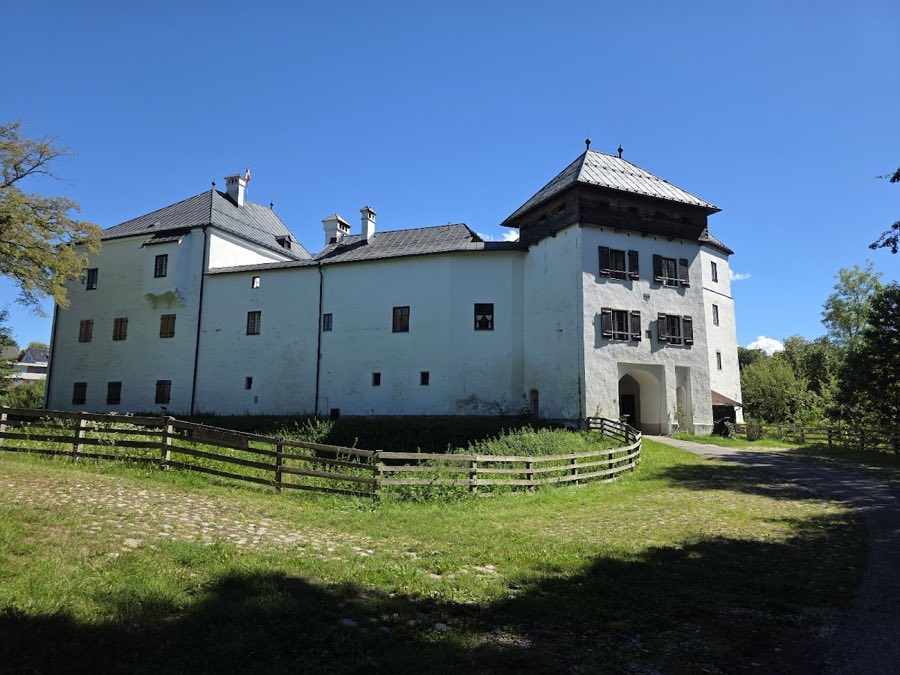
Schloss Wildshut is a castle in Austria with origins associated with the 14th century.
See all castles in AustriaSchloss Wildshut is situated in the village of Wildshut within the municipality of St. Pantaleon in modern Austria. Its origins trace back to early medieval times, with the original fortifications established by Germanic settlers in the early Middle Ages.
The earliest recorded reference to a fortification at this location dates to 1115, when it was known as castrum Hutte. At that time, the lord Albert de Hutte is documented as its occupant, indicating the site’s use as a noble residence or defensive stronghold during the High Middle Ages. Over the following centuries, the castle’s name evolved into Wildshut, reflecting the continuity of settlement and local linguistic shifts.
By the late 14th century, Schloss Wildshut had taken on the role of a hunting lodge for the dukes of Bavaria. Its strategic position along the border between the Duchy of Bavaria and the Archbishopric of Salzburg made it an important site for regional control and leisure. In 1402, the castle became the administrative center for the Weilhart district court, a judicial institution that governed local affairs, and it was granted as a fief to the Nußdorfer family, signifying its status as a seat of local power.
Around the year 1500, control of the castle reverted to the Bavarian dukes, who undertook significant renovations to update and strengthen the structure. Governance during this period was managed by appointed stewards, including Hans Offenheimer, who served from 1500 to 1521, followed by David Aigl until 1548. These administrators oversaw both the estate and the judicial functions associated with the castle.
In the 17th century, changing living conditions led stewards to manage the estate remotely from their own residences rather than residing at Schloss Wildshut itself. Following the transfer of the Innviertel region to Austria in 1779, the castle continued to function as a district court for the Wildshut area. Between 1810 and 1816, the judicial authority was subordinated to the Salzburg district court located in Laufen, but it later regained its independent status.
The district court operating within Schloss Wildshut remained active until 2002. After the court’s closure, ownership of the castle was transferred by the Republic of Austria to Georg Florens Traugott, who initiated extensive restoration efforts to preserve and enhance the historic building.
Schloss Wildshut occupies a position atop a river terrace with a steep incline leading down to the Salzach River, a natural defensive advantage exploited since the earliest fortifications were established. Encircling the castle is a ring wall, which likely dates back to the initial recorded construction phase in the early 12th century. This wall forms a protective perimeter that has stood through centuries of modification.
Much of the castle’s present-day fortified appearance results from construction work carried out in the 16th century. These building phases introduced features that remain visible inside the structure, illustrating the layering of architectural styles over time and reflecting the functional demands of the Renaissance period.
Adjoining the defensive wall is a small chapel, designed to serve the spiritual needs of the castle’s inhabitants. This chapel contains a notable altar painting titled “Maria Hilf,” created in the mid-19th century, marking a later artistic addition that enhances the religious character of the site.
Within the central courtyard, there is a masonry-lined draw-well reaching approximately 150 meters in depth. This feature was painstakingly restored to full working order, demonstrating the importance of reliable water sources for the castle’s sustainability.
The exterior masonry of Schloss Wildshut retains a stylistic purity that speaks to the care taken in its construction and maintenance. While many original interior furnishings have not survived—largely due to the castle’s prolonged use as a judicial building and the various restoration projects—it houses a historic tiled stove dating from 1683. This stove, which was formerly exhibited in the Upper Austrian State Museum in Linz, has been relocated and is now installed in the castle’s concert hall, linking the site to regional cultural heritage.
Renovations under the current ownership have included the installation of floor tiles made from shell limestone on the first story, repurposed from the old Linz train station. In the courtyard, a sundial has been added that records the years of major restoration work, blending historical preservation with new elements that document the castle’s ongoing evolution.
At present, Schloss Wildshut functions as both a residence and an event venue, preserving its historical fabric while adapting to contemporary uses.
No. 94652
No. 51650
No. 29490
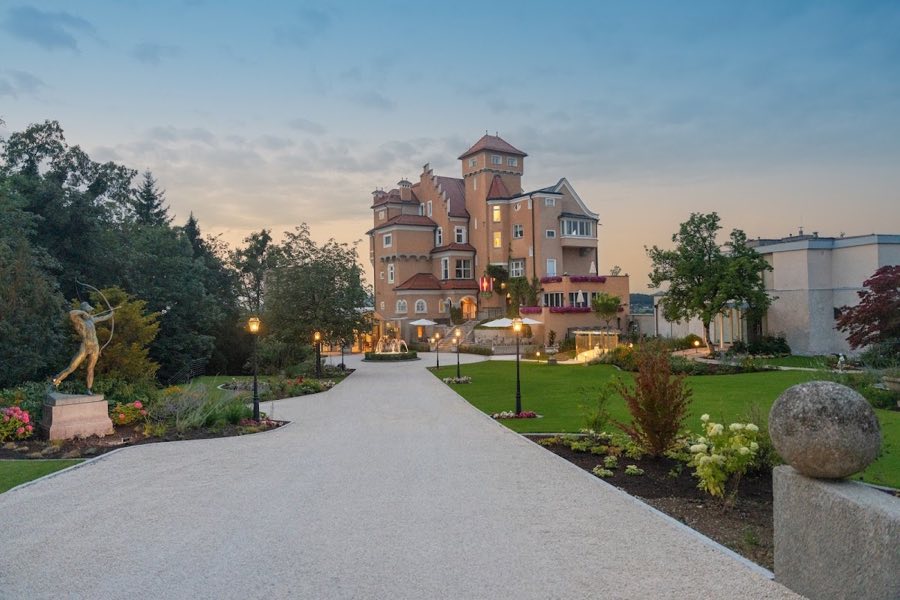
No. 35699
Comments
Comments for Schloss Wildshut will require a verified account before posting.
We'll send a verification link before your first comment is published.