No. 16838
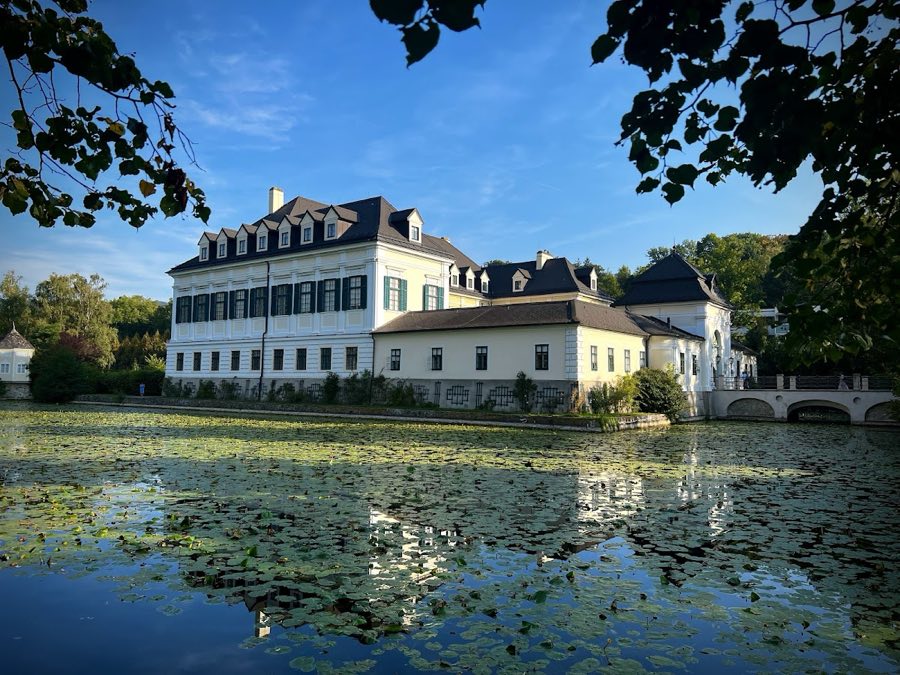
Laudon Palace
Austria
CastleRestoredFor rent18th century
No. 44281
Palace · Austria
No. 44281 · 48.220 N, 16.286 E
For rent
Schloss Wilhelminenberg is marked for bookable castle accommodation. Nightly pricing, sleeps count, stay rules, and amenities are displayed only when public operator data is available.
Rental type: Hotel / bookable stay, Short-stay rental
Short-term availability: Bookable accommodation signal
Quick summary
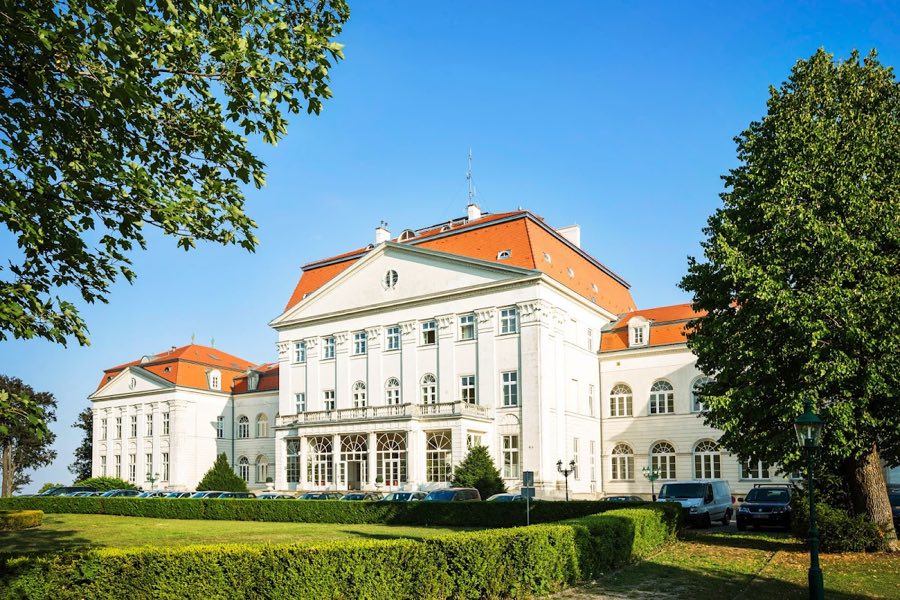
Schloss Wilhelminenberg is a palace in Austria with origins associated with the 18th century.
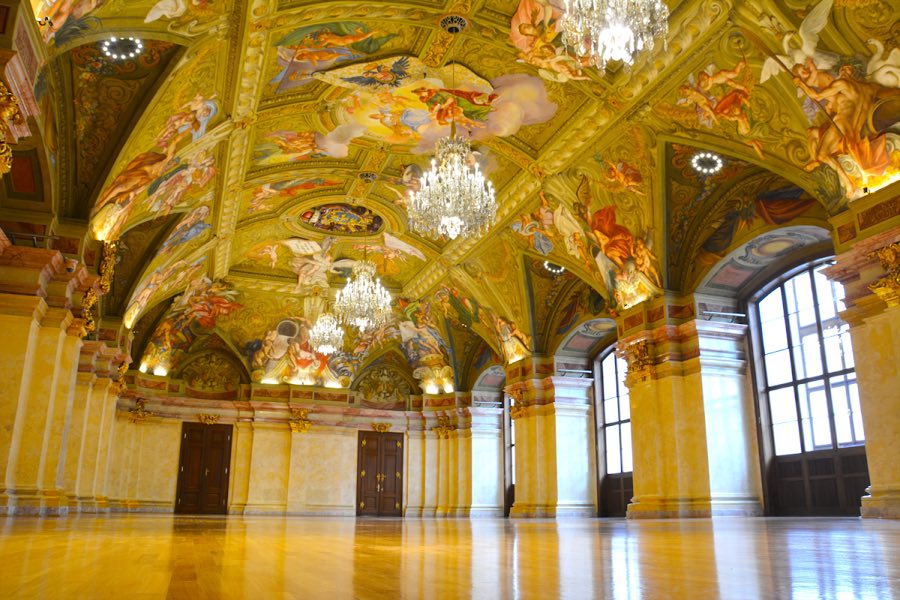
See all castles in AustriaSchloss Wilhelminenberg in Vienna, Austria was established on a hilltop site first developed in the late 18th century and took its present architectural character in the early 20th century as a Neo-Empire style palace. Construction began under an Austrian field marshal who bought the Predigtstuhl site in 1781, and the estate later became important as a landscaped park and a residence for members of the imperial family and other high nobles. Across two centuries the property served as a private country seat, a military and hospital facility in wartime, and as a range of municipal institutions, reflecting changing social and political needs in Vienna.
From the 1780s the site passed quickly into the hands of a Russian diplomat who enlarged the holding and laid out a designed park with ornamental ponds, a round temple, artificial Roman ruins and a hunting lodge. After his death in 1793 the estate passed to a Russian heir, and by the 1820s the castle had fallen into disrepair. In 1824 a princely couple bought the property and opened the house to society; in 1838 the building was enlarged with two lateral wings.
A later inheritance dispute brought the property into the public eye. In 1866 the son of the prince transferred ownership of the castle and grounds to his wife, Wilhelmine. Official authorities refused a formal renaming, so the family erected nameplates reading Wilhelminenberg at the estate entrances, and the new name entered common use. The prince was interred in a neo-Gothic mausoleum near the house in March 1887; Princess Wilhelmine was buried beside him when she died in 1895.
Between 1903 and 1908 the older house was taken down and replaced by a large Neo-Empire palace built as a residence for imperial archdukes; the project included several ancillary buildings and cost about 1.4 million crowns. The property was home to Archduke Rainer and, from January 1913, to Archduke Leopold Salvator. During the First World War the new palace was converted into a hospital and convalescent home for wounded soldiers.
After the war the site passed into private hands in 1922, then was acquired by the city of Vienna at a forced auction on 16 November 1926. The municipality opened a children’s hostel there in 1927. From 1934 until 1939 the Vienna Boys’ Choir occupied the premises. In March 1938 the National Socialist authorities confiscated the estate and handed it to the Austrian Legion. During the Second World War the building again served as an army hospital, physically linked to the adjacent Wilhelminenspital.
In 1945 the palace was used as a recuperation home for children and as accommodation for former concentration-camp prisoners. In 1950 a therapeutic pedagogical observation station was transferred there from another institution. From 1961 until 1977 the site functioned as a residence for pupils of special schools, initially for girls and later also including a boys’ unit. In 2011 extensive historic abuses from that period came to light; the city compensated 2,384 reported cases with a total of €52 million, and victim advocacy groups described the facility among the most serious hotspots of abuse.
On 1 July 1986 city officials announced a plan to convert the palace into a guesthouse. After fourteen months of rebuilding the property reopened in 1988 as a three-star Gästehaus Schloss Wilhelminenberg. It later became Hotel Schloss Wilhelminenberg and, following a further three-year refurbishment around the turn of the millennium, was reclassified as a four-star hotel operating under the Austria Trend Hotels brand.
The estate occupies a wooded hill in Vienna’s sixteenth district and sits within a park of about 120,000 square metres that slopes down toward the Liebhartstal valley. The principal building presents a south-southeast facing front that anchors the landscape; the grounds retain the layout of a designed pleasure park with formal and decorative elements placed to be seen from the house and approaches.
Several ornamental features survive within the park. Multiple ponds punctuate the grounds and were laid out as water features linked to the landscape design. A round temple was installed as a garden ornament, and a constructed group described as Roman ruins was introduced as an artificial antiquity to enliven the walks. A hunting lodge also forms part of the ensemble, all created as scenic elements around the main house and its approaches.
The funerary monument near the castle is a neo-Gothic mausoleum built late in the nineteenth century. It serves as the burial place of the princely couple who owned the estate in that period and stands close to the residence, marking the family’s connection to the site.
Architectural phases can be read in the surviving complex. The building that existed in the early nineteenth century was enlarged by the addition of two side wings in 1838. In the first decade of the twentieth century that earlier house was replaced by a Neo-Empire style palace, a comprehensive rebuilding that included outbuildings and service structures as part of a single planning scheme. The principal palace and its service range continue to enclose the historic park and remain in active use. During periods of armed conflict the palace was connected physically to the neighbouring Wilhelminenspital to serve as hospital accommodation, and that wartime linkage shaped later functional adaptations.
No. 16838
No. 74700
No. 98904
No. 99382
Comments
Comments for Schloss Wilhelminenberg will require a verified account before posting.
We'll send a verification link before your first comment is published.