No. 39112
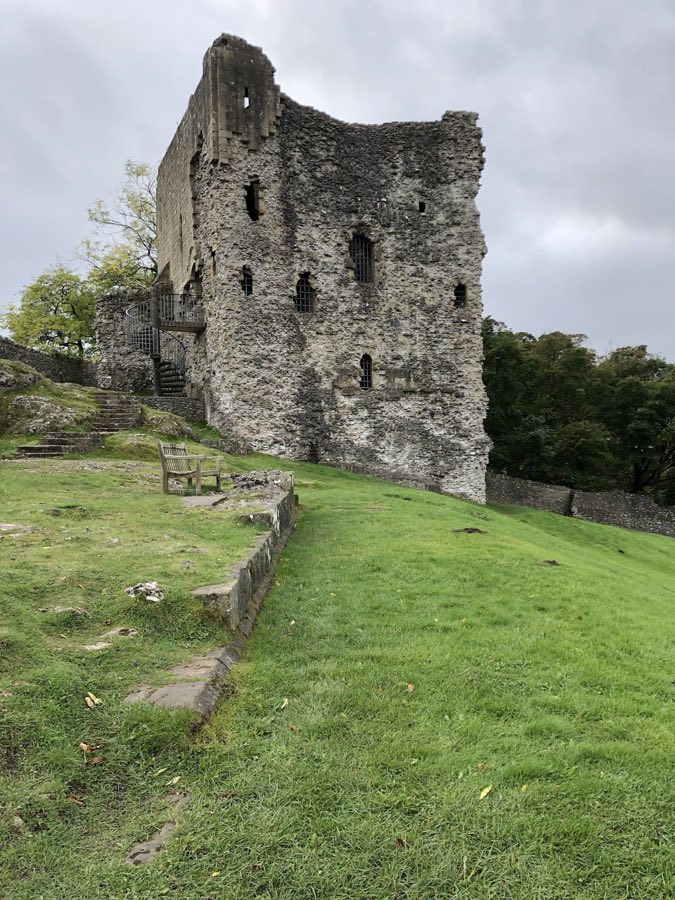
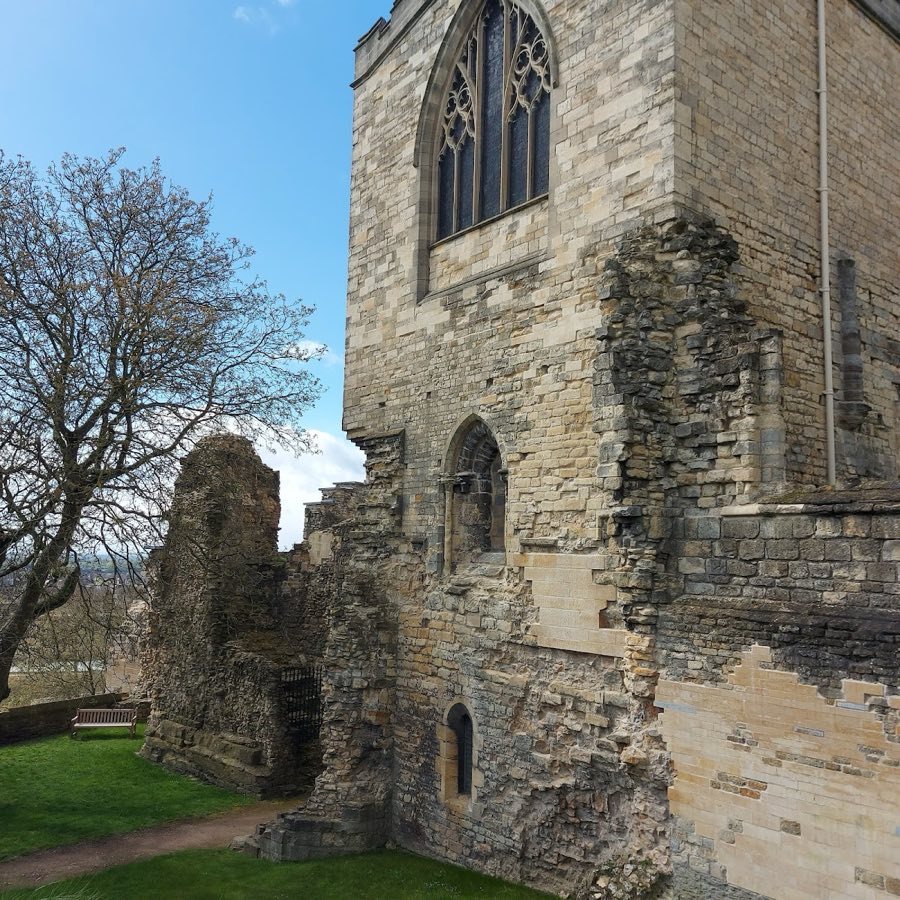
Peveril Castle
United Kingdom
CastleIntact11th century
No. 19625
Castle · United Kingdom
No. 19625 · 53.385 N, 1.463 W
Quick summary
Sheffield Castle is a castle in United Kingdom with origins associated with the 13th century.
See all castles in United KingdomSheffield Castle stands in the city of Sheffield, England, and was erected by Norman lords after the Conquest of 1066.
In the decades after 1066 a wooden motte-and-bailey stronghold was raised on the riverside site. William de Lovetot is usually credited with creating that first post-Conquest castle. That timber fort did not survive the upheavals of the 13th century; it was destroyed during the Second Barons’ War in 1266.
A second, more durable phase began when Thomas de Furnival obtained a royal charter from King Henry III and work on a stone castle started in 1270. Over the following centuries the castle belonged to the Furnival family and sat beside a large park. In 1516 George Talbot, fourth Earl of Shrewsbury, constructed Sheffield Manor within the castle park.
Between 1570 and 1584 the castle and its lands held Mary, Queen of Scots, at times as a place of custody. On 26 February 1574 an earthquake damaged the apartment where she was kept. A later account written in 1707 reports that, when the castle was taken down in the years following the civil wars, a stone was found bearing an inscription claiming that Lord Furnival built the hall and lay buried beneath the wall.
The castle became a military focus in the mid-17th century. On 11 October 1642 Sir John Gell seized the town and the castle for Parliament. Royalist forces under the Earl of Newcastle took the site in April 1643 and left a garrison commanded by Sir William Savile. The castle surrendered in 1644 with Major Thomas Beaumont serving as governor, and the siege and recapture involved Major-General Crawford, Colonel Pickering and Lord Fairfax. The House of Commons ordered the fortress to be rendered untenable on 30 April 1646 and directed its demolition on 13 July 1647; extensive dismantling and razing followed. The Earl of Arundel bought the property in 1649 with the intention of restoration, but no rebuilding was carried out. After demolition the site was used as an orchard and later as a bowling green before subsequent redevelopment. Evidence recovered during excavations shows the location had earlier activity, including prehistoric and Roman finds. No drawings or plans of the castle are known to survive.
The later medieval castle was a stone-built enclosure sited between the River Sheaf and the River Don, with the rivers providing natural defence on the north and east and a moat recorded on the south and west sides. The stone defences constructed after 1270 occupied roughly 4.2 acres, extending from the River Sheaf to Waingate and from the River Don to Dixon Lane, while a substantial park lay beyond the walls.
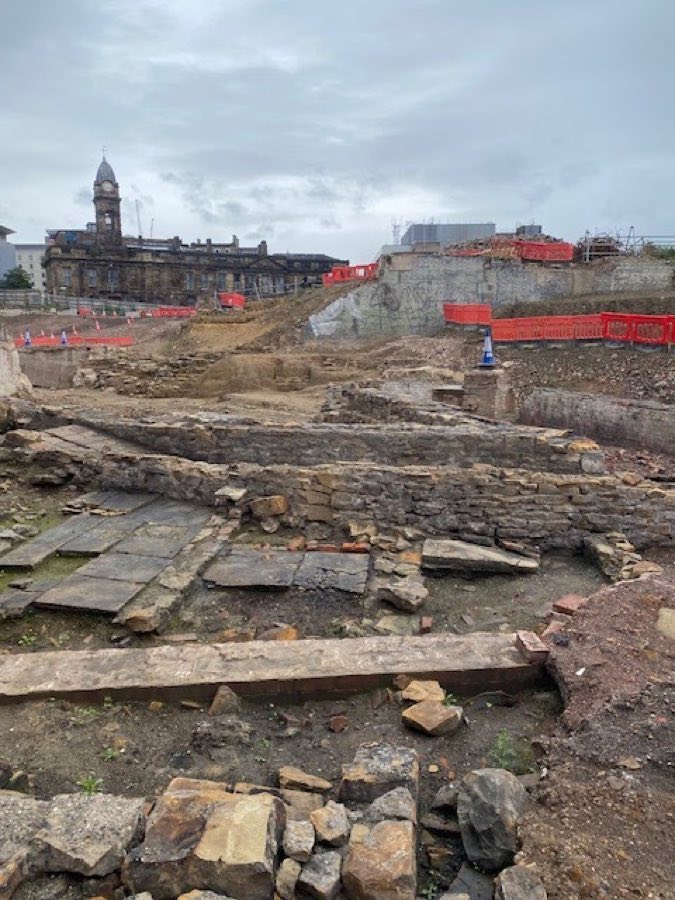
Excavation uncovered the base of a gateway bastion tower and part of the gateway structure, remains that represent about one quarter of the eastern gate tower. These masonry fragments were exposed in the 1920s and later remained visible in two rooms beneath the twentieth-century Castle Market building until the market’s demolition in 2015. The fragments stood approximately 32 feet above the River Don. The masonry is built of the medieval stone used when the castle was rebuilt from 1270 and survives in a fragmentary but in situ condition.
Archaeological work has revealed buried foundations and earlier construction phases beneath the later stone castle. Investigations in 1927 uncovered the base of the 1270 stone works together with evidence for antecedent structures. Further fieldwork by university teams in 1999 and 2001 expanded the known footprint of the site and showed the castle to be larger than earlier estimates. A major excavation in August 2018 produced additional structural evidence and helped define the castle’s boundary.
Finds made within the site range across many periods. A Bronze Age flint horseshoe scraper and Roman pottery including Samian ware and material from Silchester were recovered during the 1920s work. The 1707 report describing an inscribed flat stone, said to have been discovered during demolition in the mid-17th century, records an epitaph naming Lord Furnival as builder and burial occupant beneath a wall. The masonry exposed in the 1920s is protected as Grade II listed, and ongoing local research and volunteer groups continue to investigate and interpret the surviving fabric and buried features.
No. 39112
No. 97208
No. 13791
No. 39771
Comments
Comments for Sheffield Castle will require a verified account before posting.
We'll send a verification link before your first comment is published.