No. 37257
Castle Gresley
United Kingdom
CastleIntact12th century
No. 13791
Castle · United Kingdom
No. 13791 · 52.860 N, 1.690 W
For events
Tutbury Castle is marked as a château or castle venue lead. Capacity, indoor/outdoor spaces, catering rules, and accommodation options are published only after public verification.
Event types: Private events, Cultural gatherings, Filming and photography
Quick summary
Tutbury Castle is a castle in United Kingdom with origins associated with the 13th century.
See all castles in United KingdomTutbury Castle is located in the town of Tutbury in England and was built by Norman settlers shortly after the Norman Conquest. The castle served as the base for Henry de Ferrers, a Norman nobleman who established the site around 1080. From this stronghold, he governed the wapentake of Appletree, an administrative division that included the forest region known as Duffield Frith. Henry de Ferrers and his wife Bertha played a significant role in supporting the Church locally by endowing Tutbury Priory with two manors. Originally, the castle functioned as a dependency of the Norman abbey of St Pierre-sur-Dives, linking it to religious institutions in Normandy.
During the 12th and 13th centuries, the castle experienced several episodes of conflict and upheaval. It suffered damage during the rebellion against King Henry II in 1173–74 when it was deliberately slighted, or partially destroyed, to reduce its military value. Later in the 13th century, after Robert de Ferrers led a rebellion, the future King Edward (then Prince Edward) attacked Tutbury Castle in 1264, nearly destroying it. Following these events, the castle’s lands were confiscated from the Ferrers family and granted to Edmund Crouchback in 1269, after which the estate became part of the Duchy of Lancaster, a significant royal holding.
By the 14th century, the castle had been repaired and transformed into a comfortable residence rather than a purely defensive fortress. John of Gaunt, Duke of Lancaster, undertook extensive rebuilding efforts before 1370, enhancing its status as a noble household. From 1372 to 1394, the castle was the permanent home of his wife, Constance of Castile. Her court at Tutbury was renowned for fostering music and the arts, marking a cultural flourishing during this time.
The castle’s most notable historical episodes in the 16th century involved the imprisonment of Mary, Queen of Scots. Between 1569 and 1585, Mary was held at Tutbury on multiple occasions under strict supervision. Her lodgings were carefully arranged with furnishings sent from the Royal Wardrobe, although Mary described her quarters as cold and damp. She resided in a timber-framed lodging attached to the castle walls, where she even fashioned a tapestry tent over her bed to retain warmth. Throughout her captivity, several prominent figures were responsible for guarding her, including George Talbot, the 6th Earl of Shrewsbury, as well as Ralph Sadler, John Somers, and Sir Amyas Paulet.
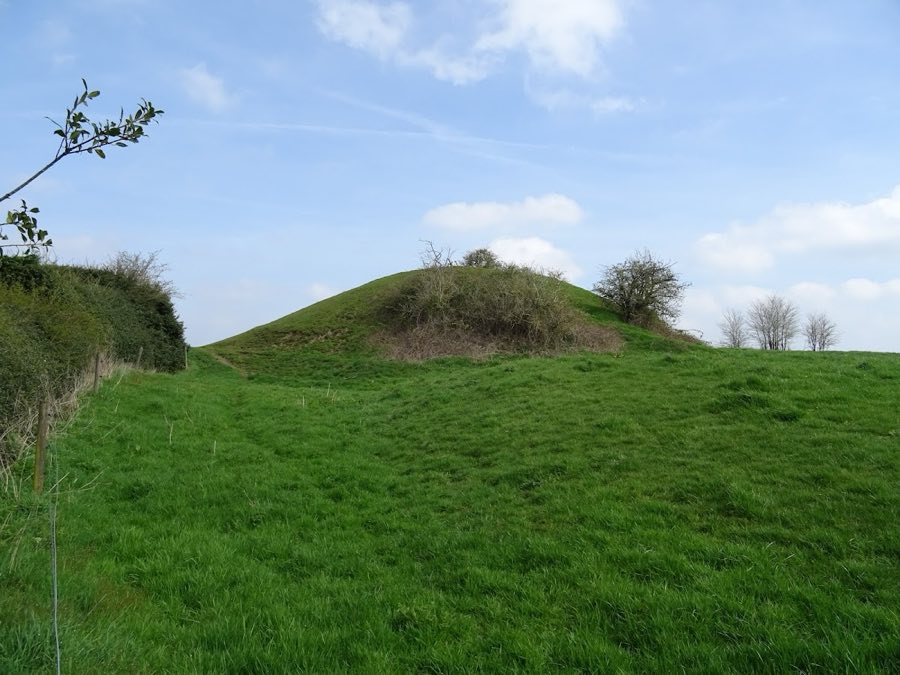
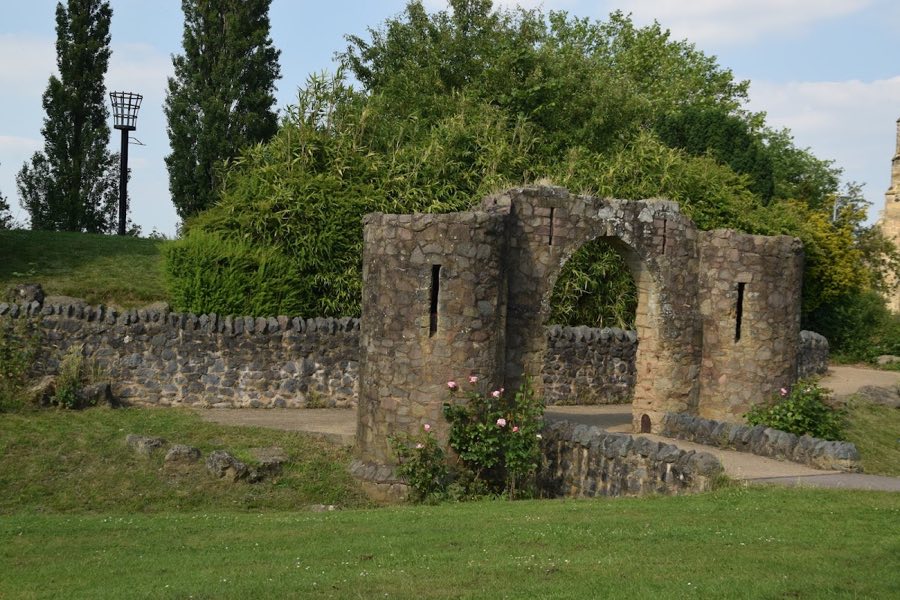
By the late 16th century, the condition of the castle was in decline, though it remained in use for royal visits, including those by King James I between 1619 and 1624. During the English Civil War in the mid-17th century, the castle was held by Royalist forces but came under siege by Parliamentary armies in 1646. Following its surrender, authorities deemed the position militarily indefensible and ordered its demolition between 1647 and 1648. Several decades later, in 1780, a decorative folly was constructed on the castle’s motte, the raised earthwork mound that formed part of its defenses. Today, the remains of Tutbury Castle are under the care of the Duchy of Lancaster and are protected as a scheduled monument and a Grade I listed building.
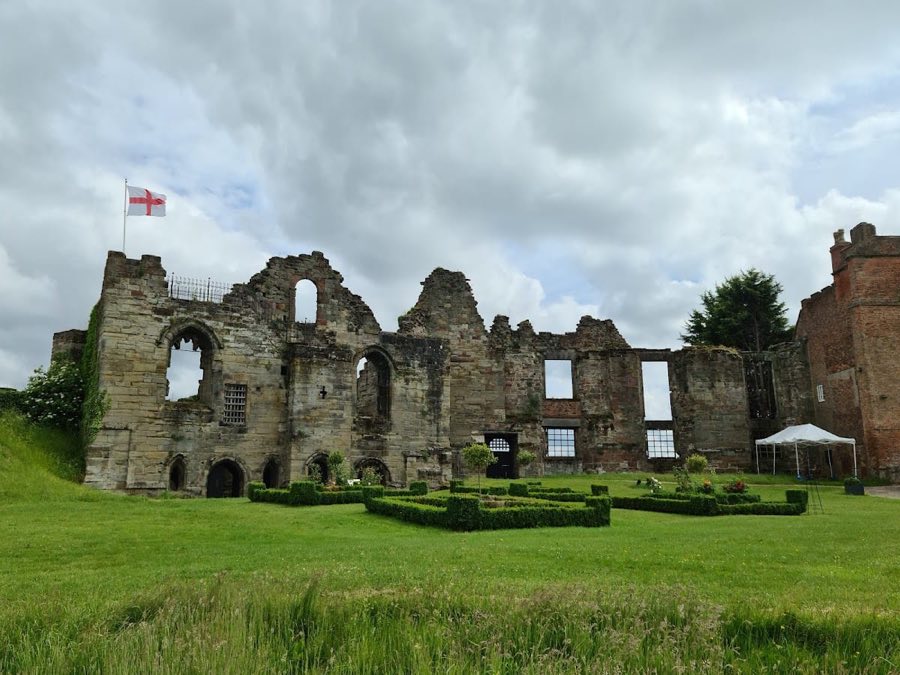
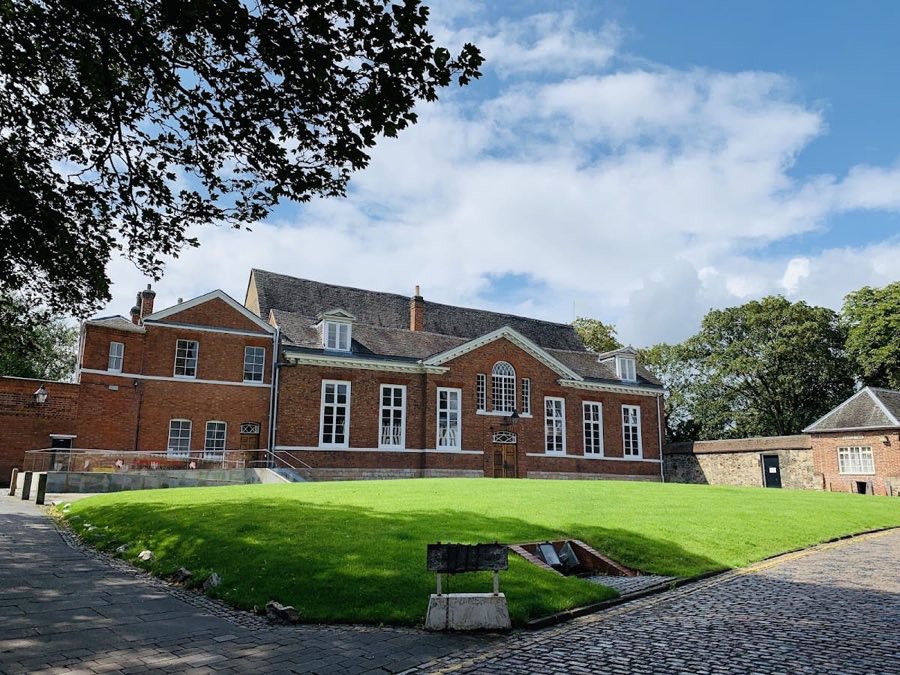
The ruins of Tutbury Castle primarily date from the 14th and 15th centuries, reflecting its period as a noble residence under John of Gaunt and subsequent occupants. The site occupies a slight hill reaching approximately 86 meters above sea level, allowing the castle’s enclosure to overlook the nearby village of Tutbury. This enclosure has been compared in its shape and scale to the Bois de Vincennes, a large park in Paris, showing a broad and spacious layout rather than a tightly compact fortification. The castle was mainly constructed from stone, typical of medieval castles, with some lodgings featuring timber frameworks.
Among the surviving features is a 12th-century chapel, one of the oldest structures on the site, which stands as a testament to the castle’s early religious associations. This chapel has endured through the centuries amid the later expansions and modifications.
Mary, Queen of Scots’ accommodation at Tutbury reveals specific architectural details that speak to the castle’s function during her imprisonment. Her bedchamber was situated at the top of a timber-built lodging leaning against the castle wall. This room contained two windows facing inward towards the castle’s courtyard but none looking through the outer wall, likely as a security measure. To cope with the cold, Mary created an improvised tapestry tent over her bed, illustrating both the discomfort of her quarters and her resourcefulness.
An outdoor enclosure made from wooden palings served as her garden area. Mary herself likened this space unfavorably to a pig run rather than a pleasant garden, hinting at its modest nature. Remarkably, records show she had a billiard table while detained here, demonstrating some allowance for leisure activities within confinement.
Another lodging used during her 1569 imprisonment stood about 24 feet (approximately 8 meters) above ground level and featured two chambers with windows overlooking dykes leading towards Tutbury town. These windows, along with an attached latrine sometimes called the “house of office,” presented potential security concerns due to their angles and access points, highlighting the challenges of securing high-status prisoners in a medieval castle.
By the late 16th century, the overall fabric of the castle was deteriorating, reflective of less frequent maintenance and changing military needs. After the Civil War siege and the castle’s surrender, its defensive usefulness was declared lost, resulting in orders for deliberate demolition. However, traces of the stone walls, earthworks, and timber lodgings remain visible on the site today. The motte, originally built as the castle’s defensive mound, was later capped with a folly constructed in 1780, adding a layer of 18th-century landscaping to the historic ruins. The entire site, located within relatively flat terrain, still conveys the outline and scale of this important medieval stronghold.
No. 37257
No. 63097
No. 35132
No. 36945
Comments
Comments for Tutbury Castle will require a verified account before posting.
We'll send a verification link before your first comment is published.